Thursday, April 23, 2009

Controversial Poker Player Paul Phillips Admits He Used Enhancer Pills To Help Him Win $1.6 Million In 6 Months!


We all remember Paul Phillips, right? The Internet Tech Wiz, who was once banned from the WSOP for badmouthing the Horseshoe´s policy for cutting up tournament entry fees, has admitted to turning to "neuroenhancers" to help him beat the games while he was very active on the pro poker circuit.

Phillips, who started off writing software and helped found an Internet portal called go2net, and who is nicknamed "Dot Com," got into playing professional poker as a teenager and soon afterward started taking neuroenhancers. He won $1.6 million in six months.

“After a pill is consumed, tiny molecules are absorbed into the bloodstream, where they eventually cross the blood-brain barrier and influence the operation of the wetware up top.”

With Provigil, he “could process all the information about what was going on at the table and do something about it.”

I wrote a detailed article on these neuroenhancers. Read part one and part two.

Wednesday, April 22, 2009

Can You Learn Poker and Casino Cheat Moves By Watching You Tube Cheat Videos?


More and more these days, poker and casino cheat videos are appearing on You Tube--and some of them are darn good! There are even videos of my famed "Savannah" move. Does this mean that you can watch them umpteen times, learn the moves and then go out to the casinos and do them? Well, the basic moves are all there, but like I´ve said countless times on my blog and in response to e-mails from hopeful and would-be poker and casino cheats, there is so much more to cheating in poker rooms and casinos than the moves themselves. So the answer to the question is really NO!

Monday, April 20, 2009

What About Poker Card Flashers? What Should You REALLY Do When You Sight One?

Professionals from Doyle Brunson to Annie Duke have said that poker is a "game of decision-making under conditions of uncertainty." But what happens when those conditions of uncertainty are eliminated - when the opponent to your immediate left or right unknowingly, carelessly and stupidly flashes you the two cards in his or her hand? It's a dicey situation, for sure. On one hand, these "card flashers" give you useful data, information you can use to either pounce on the pot or fold and run for the hills. On the other hand, this inside information changes the complexity of the game, creating an unfair edge which some might say is cheating.

Do you keep quiet? Do you speak up? In the interest of experimentation, upon encountering a card flasher during a recent no-limit session at a North Bay cardroom, I tried it both ways.

One poker player said, "The first time, I kept my lips sealed, calling the $5 pre-flop wager with my suited K-9 after seeing my opponent's Q-5 off-suit. The flop came A-Q-9, all different suits, and when the table checked around to him, he bet a measly $15. I raised to $60, representing an ace, even though I had nothing but bottom pair and knew he had me beat. Predictably, the flasher mucked his hand, and I won the pot. The next time, after he folded an unsuited 8-4, I folded a J-10 and someone else won the hand, I tried a different strategy: I spoke up.

"Hey man, can I offer you some constructive criticism?" I asked flatly, not really waiting for a response. "You might want to be more careful with your hole cards, because I saw them pretty clearly on that last hand."

The flasher was stunned. "Seriously?" he asked, more rhetorically than anything else. When it was clear I wasn't going to provide any additional information, he leaned back in his chair and reluctantly added, "Thanks."

Around the table, reactions to this exchange varied. Across from us, in Seat 9, a player nodded at me in approval, as if to say, "Classy move." Down the table, in Seat 2, a different player shook his head in disgust, admonishing me for publicizing information that some of our opponents may have tried using to their advantage.

The dealer, who spotted me catching that glimpse of the guy's cards in the first place, just looked confused. That's when it hit me: Maybe confronting card flashers is the wrong way to play. Sure, moralists might say I was "doing the right thing" by giving this dude the heads-up, but when have people really worried about morals in poker? Furthermore, one could argue that by drawing attention to my unfair advantage, I was telling my opponents something about myself: that I lack the killer instinct necessary to win big pots.

The lesson? At the poker table, silence reigns supreme. If you're uncomfortable with a card flasher's proclivities to tip his hand, don't look; if you're comfortable with the extra information, use it wisely and keep your mouth shut.

Do I, renowned poker and casino cheat Richard Marcus, agree with this?

You bet your ass!!!

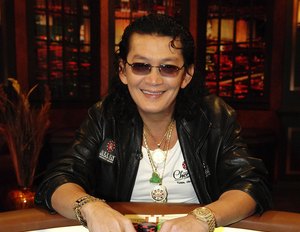
Is Scotty Nguyen Denying Cheating Too Much?


In lots of talking lately, which ex-World Champ and controversial professional poker player Scotty Nguyen should consider cutting back on, he has been constantly referring to cheating poker and his not doing it. Do you find this a bit strange? Do you think he´s real or is he on a guilt-hide-the-truth-trip? Well, here´s some of what he´s been saying lately:

"What I learned from the final table at the World Series is that winning is sometimes not everything. The only way you enjoy your win, you have to make the game pretty. You have to play in a gentlemanly way, not a bad way, not a nasty way. Some people out there are dirty and they're nasty, they try to needle you. When I'm at the final table at this H.O.R.S.E. event I'm telling myself to not let something like that happen. Just play your game and win pretty. This way when the trophy is in my house I can look at it and be proud.

What happened at the World Series…it happened…As long as there was no cheating going on I feel good about myself. I just come in there, play my game, I talk trash, it was one of those days where you didn't control yourself. You didn't sit back and think about all of the people watching you. I'm just so focused, just trying to win. I forgot about the cameras, I forgot about the fans. The only thing I regret about the World Series and the H.O.R.S.E. event is that I let my fans down. All the young kids that said, "Look, Scotty Nguyen is on TV," I let them down. That's the only thing I ever regret. Other than that baby, I play my game to win. I won it all with my skill.

As long as I don't cheat I go home, I close my eyes, and I sleep well. The only thing that didn't let me do that after I won was that I let the fans down, and I promise them it will never happen again. I might talk trash a little bit, but it's nothing to compare to the World Series. I want to win pretty…The mistake is no good if you don't learn from it…I want to make sure it never happens again."

Thursday, April 16, 2009

NBA Star Allen Iverson Accused of Being a Casino Cheat!


Wow! But come on, gimme a break! Why would a guy making $20 mil a year shooting baskets lower himself to casino cheating? Okay, I know he´s got a few dozen hanger-onners whom he supports, but I think he could keep them all in decent life styles and then some with his salary. But according to some high-ups in Detroit casinos, Iverson has taken some "outside" shots at Motown´s blackjack tables. Spokesmen for two casinos say Iverson, now playing for the Detroit Pistons, has not been banned from the facilities despite reports to the contrary, according to the Detroit Free Press.

According to the report, Greektown casino spokesman Riley Meredith said Iverson was not banned, nor did he know if Iverson was warned about "improper benefits" (what the hell is that supposed to mean?).

MGM Grand Detroit spokesman Jamaine Dickens said Iverson was not banned from the casino, and he did not know of any behavioral problems involving the guard. But the Detroit News is sticking by its original story about Iverson making trouble at the casinos.

News reporter Chris McCosky wrote, "I've have been told countless stories, from eye witnesses, about Iverson throwing cards or chips at dealers after he losses, even spitting at a dealer, being overly loud and profane at the tables, not following casino protocal -- he was even accused of cheating more than once. So, the casinos can let him back in and take all the money he wants to lose -- that's what they are in business to do -- but don't think for a minute that he's been a model patron."

I investigated this report further, and learned from casino personnel in Detroit that several people sitting at various blackjack tables claimed they saw Iverson cap his bets (add more chips to his bets after winning outcomes) at least three times in an hour. I could not determine what the minimum or maximum bets were at the tables he played at, but unless he was popping ten grand a hand with $5,000 chips, I highly doubt he or any other professional sports star would be making more than a day´s pay in the NBA cheating casinos for an entire year!

If any of this is actually true, Iverson was probably drunk and unaware of what he was doing--at least I hope so!

Wednesday, April 15, 2009

UltimateBet Makes American Roulette Top-Ten Safe Online Poker Rooms List!

Yep, believe it or not and despite all the scandals, UltimateBet has shown enough recent cheat-free statistics to make Richard Marcus´s top-10 anti-online poker cheat ratings list. Also appearing for the first time on the list is William Hill Poker. See the entire anti-cheat poker ratings list here.

Also note the first-time appearance of Casino States on my top-10 anti-online casino cheat ratings list. See that list here.

Saturday, April 11, 2009

Casino Cheats Caught Doing Reverse Savanah Move! Here It Is On Actual Surveillance Tape!


I've gotten lots of e-mails asking me about variations of my famous Savannah move, including the "Reverse Savannah," which is hiding the lower denomination chip under the higher one and hoping the dealer pays you two higher denomination chips, and now I've got some cold evidence of people out there doing the Reverse Savannah--and getting caught!


The above pictures are actual casino surveillance shots.

Here´s what happened according to an Atlantic City surveillance report:

Our first scam happened on a BJ game. The suspect sits down on the game where a
lammer is holding a spot. The lammer is left in the wager circle and a gaming cheque is placed on top of the lammer. The scam was successful as the single cheque was paid two cheques by the dealer. The scam was realized and the player was confronted and returned the ill gotten gain.

This scam is a minor variation of the famous “Savannah” scam as the lammer creates an
offset due to its size and the dealer can’t see the lammer under the actual gaming cheque. Dealer is shown sizing into the bet with two gaming cheques. It was not realized that the lammer was under the original wager. Both of the circled photos show that the lammer is under the wager that was paid prior to being paid.
My take on this? It is not smart doing the Reverse Savannah because the dealer has too many chances to see the bogus chip underneath. With the real Savannah move, the claim is made BEFORE the dealer has a chance to pay the bet, immediately after the winning bet is realized. With the Reverse Savannah, the claimer has to sit and wait for the dealer to pay the bet, at which the dealer gets several looks. And when the bet loses, the bogus chip ends up in the dealer's rack and sooner or later will be noticed, which can lead to the giveaway of the scam.

In short, forget the reverse variation of my great cheat move!

Slot PIN Casino Cheat Scams To Be Aware Of


A slot hustler will walk up and down the slot isles looking for the “white flash” up near the slot rating card bonus panel. This white flash indicates that the patron is looking up their bonus status and using their PIN number. The hustler will take note of the PIN number and wait to see if they can figure out a way to steal the player’s card. One common scam to pick up a date of birth from a high end slot player hoping they are using the DOB is to run the name in the many available online resources in the private, local and federal level. Credit agencies may also be a source of obtaining this type of information. It is suggested to players to not use their date of birth but we all know that players want an easily remember PIN. Many casinos actually use DOB’s as the initial processing generated PIN and hope the players change them later. Some players simply leave the account open and pull out their loyalty card. The downloads and comps are still open for the scammer to take advantage of the unknowing victim. Here is an excellent scam that was detected here in Atlantic City. Our scammer has an ID program on his computer up in the hotel. He circulates the floor using any means to obtain names and PINs on slot players. From that point he goes back up to the room and makes a fake diver’s license of the player. He proceeds to go back down to the floor and use the fake identification and his illegally obtained personal information to draw comps all over the casino. This same scam can have the suspect going back to the loyalty rewards center and having new cards and PIN’s made as well. It is a potential deadly scam to any casino from a marketing standpoint.

Did you know that slot manufacturer’s install software that picks up on the most common PIN numbers and does not allow it to be assigned to the accounts of players. Some of the most common PIN numbers are consecutive numbers such as 1111, 7777, 9876 or 1234. You must always be aware of people who know your personal information such as address numbers, date of birth, social security number or a personal favorite lucky number. It is this type of information that will be utilized to attempt to access your comps and downloadable credits.

Here is one final precautionary measure that slot manufacturers afford casinos to protect your comps: If you attempt and fail on three tries to enter your PIN number it will disable the card access to the bonus comp and point area.

Let’s look at the future of PIN scams and consider the following possibility. What if a scammer used a hand-held skimmer device to swipe in a player’s rating card. Is it possible that the information contained on the magnetic strip includes the PIN number and all personal information from the account? How easy is it to tap the credits and comps from the machine? Casinos use protective measures that help to control personal identification numbers but that is not always enough. You can’t assume without testing the possibility that somehow, someway this information can be cloned to duplicate cards.

The Washington Post wrote an article about prostitutes and drug addicts using this type of device to swipe Las Vegas casino high roller’s room keys allowing access to the credit card information posted to the room for any incidentals. Is it only a matter of time before IT or rewards program employees utilize scams with information contained within the magnetic strips of slot ratings cards to commit theft against their casinos.

Continued industry communication and networking will help to keep up with current slot scams of this nature.

Thursday, April 09, 2009

Are All Macau´s Casino Patrons Cheats and Thieves?

HIGH ROLLER CRIMINAL ENTERPRISE EXPOSED

JAMES PACKER may not be able to rely on return visits from all of his high rollers
when his keenly awaited Macau casino City of Dreams opens later this year. Revenues at high-roller casinos in Macau are down due to a lack in repeat business because many of their big-spending patrons don't make it back to the tables for the roll of the dice. According to a study of 99 high rollers from mainland China whose gambling habits propelled them into the headlines, 44 per cent were either sentenced to death, murdered, committed suicide or were serving long jail sentences after committing crimes to fund their visits.

Zeng Zhonglu, a professor at the Macau Polytechnic Institute, found 15 of the gamblers were sentenced to death, seven committed suicide or were "killed by others", two were given a death sentence reprieve and 20 were serving long jail sentences.

Asian Financial Collapse and Criminal Corruption:

At least 10 Chinese companies collapsed, casualties of the massive gambling losses by big-spending players, known in the industry as "whales". Of the group Mr Zeng followed, more than half worked for the Chinese Government or state owned enterprises. The theft of state funds by government workers is believed to have triggered the Chinese Government's clampdown on issuing visas for visits to Macau, a move which has been blamed for the slump in gaming revenues which have fallen by 19 per cent since March. The 33 officials followed reported losing an average of $US2.7 million ($4 million) each while 19 senior managers at state-owned enterprises lost $US1.9 million each. Seven cashiers at state-owned businesses shed an average of $US500,000. Mr Zeng said he was unable to use questionnaires or surveys to poll high rollers because they were "reluctant to reveal their gambling experiences". His research found that in a single gambling session one gambler lost $US12 million, and one private company owner lost $US96 million over several years. The average total loss for 99 gamblers was $US3.4 million. Mr Zeng was unable to determine which casinos were used by the gamblers in his survey. High rollers are vital to Macau's 31 casinos, with revenues from baccarat games played in private rooms reserved for VIPs generating 70 per cent of total casino revenue at its peak at the start of 2008.

Wednesday, April 08, 2009

Counting Blackjack Cards With iBacus 2010 Has Casinos Scared Shitless!


Gambling regulators have warned casinos around the country about a card-counting program that works on Frigemall Industries iBacus 2010. The program illegally helps players beat the house in blackjack. The iBacus 2010 is a high-tech version of the original card counting device used in ancient Greece by Leonidis Wankeris and his legendary 300 Spartan card counters. This updated version of the device is believed to have been developed by a Spartan descendant who immigrated to Australia in 2004 to open a Souvlaki store in Melbourne. Card counting itself is not illegal under most gambling laws, but it is considered a felony to use devices to help count cards.

The iBacus 2010 from Frigemall Industries allows the user to accurately count cards at the game of blackjack. The device will not only keep a running count but will convert the count into a true count and keep a side track of Aces. The handy printer tells the player when the deck is rich with 10 value cards as well. The device can be
purchased for $11.99 from the Frigemall online store.