
As previously reported, the story about the huge online poker scandals was rumored to air on the CBS news program “60 Minutes” this Sunday, October 26th. However, when prompted for confirmation by certain other news agencies, the show's producers declined to verify the air date, instead saying that the content of the October 26th edition of the program had not yet been determined. 60 Minutes often airs current news content in addition to feature stories.
Of course I and probably every one of you reading this blog are anxious to see this segment and what else might come out about the scandals that we haven´t heard yet. Since CBS originally planned and then filmed this episode before former WSOP champ Russ Hamilton was named as the brains behind the UltimateBet scandal, it's possible that "60 Minutes" decided to further edit the segment in order to cover more about Hamilton.
Show producers stated that the content for the upcoming week is often determined on Thursdays. At press time, its website only listed the content for the October 19th installment, which aired last Sunday night. Stories on Afghanistan, Bank of America, and bullfighting took center stage last week and the show typically airs three features. Recently, 60 Minutes correspondents have also focused on the economic crisis in the United States, the details of the $700 billion bailout that was passed by Congress, and an in-depth look at Presidential candidates John McCain and Barack Obama.
The news program has been making waves in the online poker world. CBS News officials have already interviewed Harrah’s executives as well as those involved with the recent legal actions in Kentucky. Prominent poker players have been interviewed, leaving the door wide open for a variety of topics to be discussed when the online poker story airs.
The scandals at Ultimate Bet and Absolute Poker were originally slated to take center stage. The former room has until November 3rd to “commence refunding all players accounts found to have been adversely affected by the cheating of individuals under the control and supervision of the licensee,” according to a mandate issued by the Kahnawake Gaming Commission, which is the regulatory body that oversees Ultimate Bet. The site must also “remove any and all persons deemed as ‘unsuitable’ by the KGC from all involvement with the company, which shall include all levels of ownership, management and operation.”
Meanwhile, 60 Minutes could also choose to focus on the recent actions by Kentucky Governor Steve Beshear, whose seizure order of 141 internet gambling domain names was upheld in a Franklin courtroom by Judge Thomas Wingate last week. That, combined with the upcoming World Series of Poker Main Event final table resuming on November 9th, could make for a very timely feature on the show.
Thursday, October 23, 2008
Wednesday, October 22, 2008
New Poker and Casino Cheat Alert Segment Coming to my Blog!
Starting in November, each Monday and on other days when needed, I will be passing along specific ALERT information on cheating scams and serious isolated cheating incidents in both brick and mortar poker rooms and casinos across the world and across the spectrum of online poker rooms and casinos. I will be getting this very important information faster and more accurately than probably anyone else online, so be sure to stay tuned to my ALERTS so that you can use them to help you avoid becoming a victim of any of the rampant cheat scams attacking the real and virtual world´s casinos and poker rooms!

Tuesday, October 21, 2008
More Bad Luck, Cheat Scandals and Nightmares for Former L.A. Poker King and Card Club Mogul George Hardie
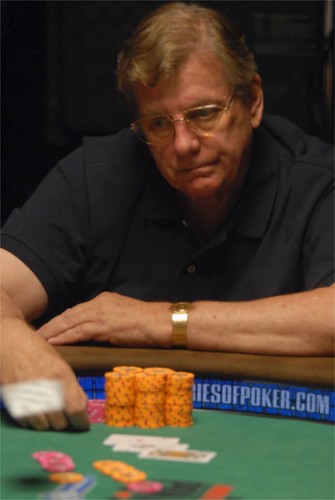
George Hardie once ran the world's largest card club. In its prime, the Bicycle Club in Bell Gardens was a second home to some of the top poker players in the country. It had a reputation for clean games, and folks liked to boast they could go there to vie with legendary card players Doyle Brunson and Johnny Chan, as well as celebrities such as Lakers owner Jerry Buss.
Now Hardie is 75, splitting his time between Las Vegas and the tiny town of Corozal, Belize, hoping to free his son and three security guards from a Mexican jail just over the border.
Every gambler has his story, and they all come back to luck. Hardie's latest turn came after he put down a big bet on casino gambling in Belize. His venture wasn't working out as well as he had dreamed even before his son, George Jr., wound up in jail. His son had followed unruly gamblers from Corozal to the Mexican border, where he was charged with possession of a gun and attempted murder.
At first, local newspapers portrayed the two Mexican nationals as innocent victims who were shot at in a quarrel over beer.
"I'm very afraid that something else will happen to me, because those people have a lot of power and money. They tried to kill me," the wounded man told a local newspaper from his hospital bed.
But after Hardie released video from the casino that night, some Mexican newspapers began to criticize the arrest of the four men, with a leading paper in the state of Quintana Roo calling it "a terrible injustice."
The case has Hardie looking back at the tough hands he's been dealt in his decades in the gambling business.
A sweet hand
None of those bad cards would have come up, Hardie insists, if he hadn't been pushed out of the best game in town nearly 15 years ago.
In the mid-1980s, Hardie was holding a sweet hand. He was the de facto king of the card clubs.
"Hardie was the driving force that created the Bike club, the largest card casino in the world," said Nelson Rose, a Whittier Law School professor and an expert on gambling. "You could almost say that Hardie was the father of the modern large California card club."
The games may have been on the up-and-up, but much of the financing for the casino, it turned out, was not.
In the late 1980s, the casino was raided by federal agents, who accused some of the card club's partners of building up the casino with laundered drug money. An investigation turned up no evidence that Hardie had any involvement, and he testified for the prosecution.
Things got worse for Hardie when the federal government got into the gambling business. U.S. marshals seized the club in 1990 after a jury convicted four men of racketeering charges stemming from laundering millions of dollars from drug deals through a number of companies, including the Bicycle Club.
Hardie stayed in the game for a while. But the government ran the club with the caution of a bureaucrat, he said. The feds weren't interested in taking chances on modernizing. Other clubs caught up. The Commerce Casino soon became the preeminent card club, surpassing the Bicycle Club, now the Bicycle Casino.
Hardie resigned as general manager in 1994, saying he wanted to pursue other interests, but remained a partner. But he had been at odds with the federal trustee who ran the casino. Two years later, the state attorney general's office recommended stripping the licenses of that trustee and top managers, saying they knowingly allowed scams, kickbacks, loan-sharking, illegal games and cheating at the club.
Meanwhile, the club's profits began to decline. He turned his eyes to Nevada, moving there in the late 1990s. He ran for county commissioner in Clark County but lost. He looked at opening a casino in Las Vegas, but he said he didn't stand a chance against the huge corporate-owned casinos.
Mostly, Hardie's time was consumed by a lawsuit he filed against the federal government, arguing that the feds nearly ran the Bicycle Club into the ground, eroding profits for Hardie and his partners. In 2004, an arbitration panel ruled in favor of Hardie and his partners, saying they were due $93.6 million from the federal government. The ruling is being appealed.
The closest Hardie came to running a casino again was a small "slot parlor" store he owned in Cancun, Mexico. The machines did not give cash, but rather tickets that could be used for prizes, such as meals, at about 40 hotels. Belize was tantalizingly close, and he felt the country would appreciate any business.
"I felt like Columbus jumping on the boat, trying to find the trade route to India," Hardie said with a laugh. "You always think big."
Hardie dreamed of high-rollers from Mexico City and other parts of Mexico showing up to gamble in Belize. It took years to raise the funds and to find investors, and then to build the casino. There were delays.
Two years ago, Hardie's Las Vegas Casino finally opened in Corozal. But the high-rollers did not show up. Instead, most of the gamblers were local Belizeans and working-class Mexicans from just across the border.
He knew that one reason the well-heeled had not shown up was that his casino did not have a hotel yet. But the first part of his planned hotel, which he vows will be Belize's most luxurious, will open by the end of the year, he said. And the rest could be finished by April 2009, he added.
Hardie said he was hopeful.
Then, on July 13, two men from the nearby Mexican town of Chetumal showed up at the casino. Hardie was at his Las Vegas home when he got a call from one of the casino regulars in Belize: There had been a shootout in the parking lot.
Police in Corozal said the men from Chetumal had been ordered out of the casino for combative behavior and suspicion of being drunk. They returned, firing guns, according to police. At least one security guard apparently fired back, wounding one of the men, who fled over the border. Hardie's son showed up and with three security guards drove to the Mexican border. He said they went there to warn Mexican authorities about the shooters. But he and the guards were carrying weapons.
Mexican authorities arrested them and charged them with crossing the border with guns.
"They had every intention of letting the Mexican government know that this shooting happened," said their Mexican attorney in Chetumal, Luis Jorge Fitzmaurice Moguel. "Unfortunately, they presented themselves to the Mexican border with arms, and they were held. It was a moment of carelessness."
Fitzmaurice Moguel said Mexican authorities based the charges on the story the two Mexican men told them, and that the younger Hardie did not participate in the shooting. Authorities declined to comment, except to provide a statement saying that the younger Hardie and the security guards had violated Mexico's federal arms law and that they were held on additional charges of attempted murder.
A judge is expected to determine whether the charges are valid as early as Wednesday. Meanwhile, the onetime king of L.A.'s card clubs is paying for the legal defense of his son and his casino guards. He said he's cautiously optimistic that they will be released. Hardie said he's going forward with his Belizean gamble, though with a bit less excitement for the hand he's holding.
"This sort of dampened my enthusiasm for being here, quite frankly," he said. "To be honest, I'm just a little disappointed."
Friday, October 17, 2008
Man Caught Cheating At Roulette in Iowa Casino!

After busting a man who was probably not very skilled at cheating casinos, a table games director at the Greyhound Park & Casino in Dubuque, Iowa, has decided to mouth off about his view on casino cheats. After listening to what he had to say, I think I might catch the next bus to Iowa!...if you get what I mean!
Gaming officials contend that they caught a Florida man cheating at Riverside Casino this week, a scenario casino authorities say is highly uncommon.
David Esau, the director of table games at Greyhound Park & Casino in Dubuque, said the facility "virtually never" experiences cheating scandals. In addition, Tim Sammons, the special agent in charge at the Iowa Division of Criminal Investigation, estimated that Riverside filed criminal charges against only three or four individuals for cheating in the past year.
"The reason is it's a Class D felony," Sammons said. "It doesn't matter if you cheat with a quarter, or a dollar, or $25."
On Tuesday, police arrested and charged 25-year-old Jose Polanco-Osvaldo of West Palm Beach with claiming winnings without a wager or more than the wager, a Class D felony. Officials said the casino's surveillance personnel allegedly observed Polanco-Osvaldo attempting to cheat at the roulette table by placing chips on winning bets after the spinning ball dropped into the slot denoting the winning number.
Three others are suspected of assisting Polanco-Osvaldo in his attempts, although officials are not releasing their names.
Despite what some may think, Esau said cheating is rare, thanks to state-of-the-art surveillance equipment and other security measures. It can be difficult to cheat, he said, noting that attempted roulette scams are the most common.
Sammons, however, took a different approach.
"It's very easy to cheat at probably any game if you put your mind to it," he said. The challenge is outsmarting the dealer, security personnel, and the "eye in the sky" - surveillance cameras.
These cameras watch the game from all angles, making it even more difficult to successfully pull off a scam.
But Sammons said if a casino ever mistakenly loses money, it's most likely not attributed to a successful cheater. Instead, it's considered a simple mistake.
"What we see more of is human error, where a dealer may overpay you," he said. "It's just through repetition all day long. They've been there eight hours."
Sammons attributed Polanco-Osvaldo's arrest on Tuesday to the surveillance operators, who he said performed "very diligently."
Polanco-Osvaldo's preliminary hearing is set for Oct. 29.
Biloxi Hard Rock Casino Roulette Dealer Caught Cheating His Game!

A table games dealer who worked at Hard Rock Casino in Biloxi was arrested Saturday for allegedly cheating the casino. David Smith, 50, of Marina Avenue in Ocean Springs, was arrested on a felony charge of violating the Mississippi Gaming Code. He was caught defrauding the Hard Rock Casino by placing winning bets for players on his roulette game after the ball already landed. His move was skillfull as he already had the players´ chips in his hand and then laid them on the winning number as he placed the roulette dolly on it. The move, which I can tell you from experience as an ex-roulette dealer, is quite difficult to perform, and when it is performed well it is very difficult to spot, even from the eye in the sky.
Smith was taken to the Harrison County jail by agents of the Mississippi Gaming Commission and released on $5,000 bail. Apparently this type of cheating was confined to Hard Rock Casino. The Mississippi Gaming Commission alerted all other area casinos to be on the lookout for the roulette scam.
Sunday, October 12, 2008
British Roulette Pastposting Cheat Team Nabbed in Jolly 'Ol London!

I never thought Brits were any good at casino cheating. They're always getting caught trying to get on with really rank amateurish cheat moves. In fact, just by the sound of the British term for pastposting, "top-hatting," I could never take the Brits' attempts at doing this very seriously. I have done many interviews for UK television and print media, and it is hard to believe how little is actually accomplished by UK casino cheat teams, although let it be said that UK casino staffs are the sharpest of the sharpest when it comes to protecting their table games. I always considered it a challenge to take off London casinos, where inside some there is an inspector sitting in a high chair above every single roulette wheel. You can imagine some of the diversion techniques my casino pastposting teams had to use!
Here's an article covering the ill-fated UK "top-hatting" (LOL) team
A Roulette cheat from Manchester who was part of a gang that used bogus identities to sneak into casinos has escaped jail.
But Robert Evans, 36, from Broadlea Road, Burnage, was banned from every casino in the country for two years.
Evans, a tutor, was given a 48-week suspended jail sentence after admitting three false ID offences and must also complete 160 hours of community service.
The gang, led by Anthony Lopez, 42, also included 33-year-old Danny Ngo.
The trio were sentenced at a hearing at London's Southwark Crown Court.
Police said thousands of pounds had been made through the trio's scam known as 'top hatting'. This involves secretly placing a chip on to the winning number while distracting staff monitoring the game.
Officers believe the three made a 'substantial amount'.
Ringleader Lopez, of south-west London, also wrote a manual for the other cheats, with instructions on how to carry out the top hatting move and obtain false identification papers.
After being banned from a number of casinos, the trio used the false identities to gain entry to other gambling places.
Police monitored the gang operating at branches of Gala Casino in London and Stockport but believe other casinos were duped. The three were arrested in July and August last year.
When their homes were searched, numerous false identity documents were uncovered as well as some crack cocaine.
Lopez, a landlord from Wimbledon, pleaded guilty to three offenses under the Fraud Act 2006, eight offenses against the Identity Cards Act 2006 and three counts of possession with intent to supply crack cocaine.
He was jailed for three-and-half years.
Unemployed Ngo, of Birmingham, pleaded guilty to four offenses under the Fraud Act 2006 and two against the Identity Cards Act 2006.
He was sentenced to 12 months' imprisonment, suspended for two years. He is also subject to a supervision order for two years and excluded from casinos for two years.
Saturday, October 11, 2008
Breaking Vegas Ultimate Cheat Episode Airs Sunday!
 IF you've never seen the televised account of my biography and career cheating casinos, tune into the Biography Channel on Sunday, October 12. Starting times are:
3:00 pm Eastern
2:00 pm Central
1:00 pm Mountain
12:00pm Pacific
If you want to get a little peek of the "Breaking Vegas Ultimate Cheat" show, check out this video preview, and don't miss the show!
PS If you can't miss any football, then be sure to TiVo it!
Friday, October 10, 2008
KGC Orders Investigation of UltimateBet & Absolute Poker Parent Company

Source: Jennifer Newell Online Poker Player Newspaper
The Kahnawake Gaming Commission (KGC) finally stepped into the UltimateBet cheating scandal to issue a statement in late July, more than seven months after a cheating scandal that featured superuser accounts able to see everyone’s hole cards was allegedly reported to UB. The company that issues and regulates the gaming licenses for UB and numerous other online poker sites told the public that it has been integrally involved in the investigations.
This column has not been short of discussion about Tokwiro Enterprises, the company that purchased Absolute Poker and UltimateBet—both online poker sites that came with cheating scandals that would be unveiled after the sales. Not only did Tokwiro discover that cheating had been ccurring through player complaints and rogue player investigations—not through its own due diligence or security measures—but neither AP nor UB lost their gaming licenses as a result. Could that have something to do with the fact that the owner of Tokwiro, Joe Norton, was Grand Chief of the Kahnawake Mohawk Territory for nearly 25 years prior to his 2004 retirement? Draw your own conclusions there.
The KGC’s July statement touted its own “exemplary” record of regulating online gaming for over nine years, but acknowledged that no industry is “…immune from abuse.” In discussing the AP and UB scandals, KGC gave credit to the players who brought these issues to light, and with specific regard to the ongoing UB investigations, noted that it has played a large role in ensuring that the system leaks were identified and rectified and that cheated players were being reimbursed. The regulatory body’s decision was supposed to be issued within the “next several days.” It was not.
Instead, four days later, another statement came from the KGC, this one a bit unexpected. “Effective immediately, the Kahnawake Gaming Commission (KGC) has appointed an independent monitor, led by former New Jersey State Gaming Regulator, Frank Catania, to investigate the KGC Licensee, Tokwiro Ent., parent company of both Absolute Poker and Ultimate Bet … The Independent Monitoring Team will be given the task of completing a full forensic audit/investigation of the online gaming business of both licensed entities. The main purpose of the investigation is to ensure that the games offered to the public are fair and honest and that all player protections as required by the Kahnawake Gaming Regulations are being complied with, without exception.
“The monitoring team will also be charged with verification that all those involved in the fraudulent activities in any manner, no matter how slight, have been or are removed from the licensee company and verify that UltimateBet and Absolute Poker have submitted to full compliance with the directives issued by the KGC and recommended by the independent monitor.”
The statement goes on to say that any failure by the licensees to comply “could result in immediate revocation of their license privileges with the KGC.” This is the first time during either scandal that the KGC has seriously floated the possibility of revocation of a gaming license. And the very seriousness of this Tokwiro investigation itself lets it be known that the KGC is willing to put its own former Grand Chief under a spotlight to try to alleviate any concerns that special treatment is being provided in this case.
Upon the conclusion of Mr. Catania’s investigation of Tokwiro Enterprises, the KGC will review the report and use it in conjunction of other UB and AP investigations to comprise a final decision regarding these scandals.
For the sake of the poker community and the future of online poker, it is not unreasonable to expect a reasonable amount of transparency and a sense that no stone has been left unturned.
Thursday, October 09, 2008
Tran Organization Cheats Inducted Into Poker and Casino Cheating Hall of Fame!
Phuong Quoc Truong and Van Thu Tran, the infamous Vietnamese couple that formed the Tran Organization Casino Cheating Team which recruited dozens of casino dealers in the US and Canada to participate in an international baccarat and blackjack false shuffle scam that proved to be the largest and most profitable casino cheating scam in history, have been inducted into the Richard Marcus Poker and Casino Cheating Hall of Fame. To read about their exploits click here.
Tuesday, October 07, 2008
California man Literally Bets "The Pot" In Public Poker Game!
This is undoubtedly one of the funniest and most unique stories I’ve ever had the pleasure of writing about.
The plot is simple, short, and sweet and involves a California poker player, his stack of chips, and a bag of marijuana.
It also give new meaning to a "high" roller.
A Fresno resident walked into Casino One gambling establishment (I still don’t know if that’s the casino name or the company behind it), sat down at a 5-Card Stud table, and instead of using chips like most normal people do at any poker table, he immediately whipped a bag of weed and placed it as his bet!...not only in front of all the other people at the table but in plain view of the filming surveillance cameras.
Click here to watch the entire incident as it was caught on casino surveillance. You won’t be disappointed, trust me.
As the “eye in the sky” was catching this all on tape, the player proceeded to place individual marijuana buds on each betting marker on the table, refusing to actually buy chips from the dealer. This went on for several minutes before casino security came to rid the table of said “sticky icky” before escorting the patron out and calling police.
The man was arrested on site as the cops literally were left scratching their heads and wondering what this guy was honestly thinking betting drugs instead of just getting chips. Not only would it had saved him a trip to the jailhouse, but it also would’ve let him put his weed to better use - I mean if you check out the video he definitely had some pretty good stuff. Haha.
In the poker player’s defense, he said that since he had a “cannibus card” the betting of his pot was not against the law and he should not have been arrested. I mean, since he did get it off the internet it must mean what he did was completely legal, right? Just goes to show you that internet can truly be serious business….just like “betting the pot” got a completely new meaning after this story.
The plot is simple, short, and sweet and involves a California poker player, his stack of chips, and a bag of marijuana.
It also give new meaning to a "high" roller.
A Fresno resident walked into Casino One gambling establishment (I still don’t know if that’s the casino name or the company behind it), sat down at a 5-Card Stud table, and instead of using chips like most normal people do at any poker table, he immediately whipped a bag of weed and placed it as his bet!...not only in front of all the other people at the table but in plain view of the filming surveillance cameras.
Click here to watch the entire incident as it was caught on casino surveillance. You won’t be disappointed, trust me.
As the “eye in the sky” was catching this all on tape, the player proceeded to place individual marijuana buds on each betting marker on the table, refusing to actually buy chips from the dealer. This went on for several minutes before casino security came to rid the table of said “sticky icky” before escorting the patron out and calling police.
The man was arrested on site as the cops literally were left scratching their heads and wondering what this guy was honestly thinking betting drugs instead of just getting chips. Not only would it had saved him a trip to the jailhouse, but it also would’ve let him put his weed to better use - I mean if you check out the video he definitely had some pretty good stuff. Haha.
In the poker player’s defense, he said that since he had a “cannibus card” the betting of his pot was not against the law and he should not have been arrested. I mean, since he did get it off the internet it must mean what he did was completely legal, right? Just goes to show you that internet can truly be serious business….just like “betting the pot” got a completely new meaning after this story.
Subscribe to:
Posts (Atom)

 Posts
Posts


