
Well, if you ever heard the maxim "If you can´t beat ´em join ´em, this is surely it! Absolute Poker and UltimateBet, the sites that hosted the online poker industry´s two biggest cheating scandals in recent memory, have found the perfect solution to make all the cheating scams go away--MERGE! Is it hard for me to believe that this has happened? Not for a second. I mean, it´s just following the pattern started by online poker sites signing admitted online poker cheats to their team rosters, isn´t it? In any case, just watch what happens now as AP and UB take on Poker Stars and Full Tilt.
Read more:
PokerStars and Full Tilt have a pretty strong hold on the Internet poker industry. The two will now receive a bit of a challenge from a group who has recently been mired in controversy.
Absolute Poker and UltimateBet are trying to regroup from a cheating scandal that has severely hurt their customer base. Now they will try and rebuild both their reputation and their customer base together.
The two sites have merged to create the Cereus Poker Network. By coming together, the two brands owned by Tokwiro Enterprises Inc. will look to become the third largest poker network in the world.
Full Tilt and PokerStars are still accepting American customers. That fact alone gives them a huge advantage over their competitors. Both of those sites are watching their customer base grow on a daily basis.
"Our company's goal is to provide poker players with the ultimate online experience. The launch of Cereus is a major step for us in achieving our goal and we look forward to making many more exciting announcements very soon," said Paul Leggett, Chief Operations Officer of Absolute Poker and UltimateBet.
Friday, July 25, 2008
New Megapixel Surveillance Cameras In Washington Casino

ARECONT VISION SHARPENS THE VIEW AT THE LUCKY EAGLE CASINO!
Arecont Megapixel Cameras Enable Improved Monitoring at Gaming Tables
Casino Cheats put on notice!
The Lucky Eagle Casino in Southwest Washington State has completed a new installation of megapixel cameras from Arecont Vision, the industry leader in megapixel IP camera technology. The casino, which has been in operation since 1995, chose to upgrade their existing analog system in order to improve the ability to view and identify critical information on video.
"It is important that our surveillance operators clearly see the indexes of the cards," said Miguel Grijalva, Director of Surveillance, Lucky Eagle Casino. "We need to view suits and clearly distinguish between a heart and a diamond, and the analog cameras we had were not providing enough of this detail."
After installation on a test server of two Arecont Vision megapixel cameras, the AV2100 and the AV5100, for a two week evaluation, the Lucky Eagle Casino purchased Arecont Vision AV2100M 2 megapixel cameras to upgrade the existing system, supplementing their analog cameras. According to Mr. Grijalva, the Arecont Vision cameras deliver highly detailed images of jackpot hands, as well as increased accuracy in chip activity at the roulette tables.
Arecont Vision AV2100M 2 megapixel cameras have a frame rate of 24 fps (frames per second) with a resolution of 1,600 x 1,200 and a minimum illumination of only 0.1 lux @ F1.4. One of the latest additions to Arecont Vision's MegaVideo(R) line of megapixel cameras, AV2100M megapixel cameras leverage proprietary patent-pending technology and help alleviate the cost and frame rate shortcomings often associated with multi-megapixel camera systems. To help ensure image clarity, the AV2100M delivers full motion HDTV progressive scan resolution and for added cost-efficiency features Power over the Ethernet (PoE).
The HD resolution of the cameras allows wider shots, enabling the casino's surveillance staff to achieve comprehensive coverage using a single dedicated camera for each table. "The frame shot is the same as the analog camera frame shot, but the clarity is several times better," said Mr. Grijalva. "If a guest had a full flush, we can go back and readily confirm it because the picture quality is so excellent."
The camera also features a built-in electronic PTZ (pan/tilt/zoom) function. In addition to the improved clarity, the casino surveillance operators found that the digital zoom was highly beneficial in live monitoring or reviewing footage. These investigative digital capabilities help the casino spot unusual activity or instances of suspicious behavior or cheating, as well as help ensure employee procedure compliance.
According to Mr. Grijalva, his team was particularly impressed with the quality of the images produced by Arecont Vision AV2100M 2 megapixel IP cameras when viewing details on the roulette wheel and for identifying stacks of chips. "The new megapixel cameras have also helped determine if a customer's claim is valid or for claims of short changing on chips," he said. "We are considering adding Arecont Vision megapixel cameras to the lobby entrances for facial recognition now as well."
Cheaters and Card Counters Beware!

Thursday, July 24, 2008
Kahnawake Gaming Commission Releases Official Statement on Ultimate Bet/Absolute Poker Scandals

The Kahnawake Gaming Commission (KGC), which oversees numerous online poker sites using Kahnawake-based Internet services in Canada, has released an official statement regarding the unfolding situation on UltimateBet Poker. The statement follows by several months the KGC's earlier involvement in the resolution of a similar scandal at Absolute Poker.
In its statement, the KGC affirms that a future decision regarding UltimateBet is forthcoming, and that its overriding concerns have been to secure full player refunds and to implement corrective measures to prevent further abuse from taking place. The complete body of the text of the KGC statement follows:
KAHNAWAKE GAMING COMMISSION
Mohawk Territory of Kahnawake
July 23, 2008
Kahnawake Gaming Commission (the "KGC") has been continuously regulating online gaming for over 9 years – longer than most, if not all, other jurisdictions. During that period of time, the KGC has proven to be a world leader with regulations and methodologies that have established a regulatory environment in which online gaming can be conducted fairly and securely. The KGC's success as a regulator is evidenced by the fact that a significant percentage of the online gaming industry has chosen to locate and operate within Kahnawá:ke. Given the length of time that it has regulated this new industry and the significant number of licensees under its control, the KGC's record has been exemplary.
As commentators have correctly noted, even the most well regulated industries are not immune from abuse. Examples can be found in the banking, securities and land-based gaming industries. The fact that the online gaming industry is new and is technologically driven creates additional regulatory challenges. Throughout its history, the KGC has met these challenges and its regulations have been emulated in a number of other jurisdictions around the world.
Over the past several months, it was discovered that individuals within two of the KGC's licensees – Absolute Poker and Ultimate Bet – had created and carried out a scheme to cheat players. In both cases, the improper conduct of these individuals was brought to the attention of the licensees, and the KGC, by affected players. The KGC acknowledges the diligence and sophistication displayed by these players and the role they played in bringing these matters to light.
The first case involved Absolute Poker. After a thorough investigation carried out by the KGC and its agents, Gaming Associates, the KGC rendered its decision in this matter on January 11, 2008. This decision concluded that the cheating that took place was not initiated, nor did it benefit, Absolute Poker as a corporate entity, or its directors or principal ownership. The decision imposed a number of sanctions and conditions on Absolute Poker, including twenty-four specific directions for changes to its management and systems. The KGC was provided evidence that all players affected by the cheating that took place were fully reimbursed for their losses.
Shortly after its decision was rendered in the Absolute Poker matter, the KGC first became aware of similar allegations of cheating involving individuals within Absolute Poker's sister company: Ultimate Bet.
Over the past several months, the KGC has been closely involved in an in-depth investigation of the Ultimate Bet cheating allegations. Significant efforts have been expended to identify and correct the flaws in Ultimate Bet's system that permitted the cheating to take place; to identify the individuals that were responsible for the cheating and to ensure that all affected players were fully reimbursed. Unfortunately, the KGC's actions were not well communicated to the poker industry or public at large, creating an incorrect perception that the KGC was 'doing nothing'.
The KGC's investigation into the Ultimate Bet matter has yielded a number of key findings which, within the next several days, will enable the KGC to issue its decision on the appropriate steps to be taken.
It should be stressed that the KGC's primary concern throughout both matters was to ensure that affected players were fully reimbursed and that corrective measures were implemented to prevent against any further incidents of cheating. Both of these objectives have been accomplished – as evidenced by the fact that the recent concerns that have been raised about the Absolute Poker and Ultimate Bet matters are not being driven by affected players.
Murray Marshall
Senior Advisor
Kahnawá:ke Gaming Commission
Wednesday, July 23, 2008
D'Amato Agrees Poker Cheating Calls For Online Casino Regulation

D'AMATO UPSET WITH LACK OF ONLINE POKER REGULATION
What the Kahnawake did not do was charge anyone with a crime, or open their operation for inspection, so as to verify the claims that the games could now be trusted...So says the chairman of the Poker Players Alliance
The recent poker scandals at Absolute Poker and UltimateBet have drawn the ire of former U.S. Senator Alfonse D'Amato and the organization he chairs, the Poker Players Alliance. The cheating which occurred at the online casinos has been attributed to a lack of regulation and transparency at the online gambling sites run by the Kahnawake Tribe outside Montreal.
Both sites were found to have software running which allowed certain poker players to see not only their own cards, but all the cards dealt at the table. The Kahnawake blamed employees who had worked under previous owners of the poker sites, promised to refund money lost to any participants in shady games, and said the employees had been fired and the software corrected.
What the Kahnawake did not do was charge anyone with a crime, or open their operation for inspection, so as to verify the claims that the games could now be trusted.
D'Amato released a statement condemning online cheating, and taking the Kahnawake to task for not providing access and visibility which would allow the return of trust to sites owned by the tribe.
Most importantly, D'Amato used the situation to call once again for federal regulation of the online casino industry, asserting that the government has abandoned its citizens in its misguided zeal to ban online gambling.
Basic consumer protection requires the government to step in and provide a safe, regulated environment for poker players and other online gamblers, D'Amato also noted.
Sherman Bradley, gaming analyst at Online Casino Advisory, said in response to the scandals, "The truth is that, as shocking as the cheating was, the reaction of the ownership group to basically act as if they could now be trusted because they said so was even more absurd. Only proper government regulation can prevent this scam from occurring again. Note that Absolute Poker and UltimateBet are not accepted as advertisers by the United Kingdom regulatory group. British citizens are served by their government informing them as to which site is trustworthy, while Americans get to play Russian roulette."
Monday, July 21, 2008
"More Truth" About Slot Machine Cheating

Gambling guru John Robison has continued his lecturing about the truth concerning slot machines. Here is his latest correspondence with "Mike," someone who definitely has strong knowledge about what is going on with slot machines, slot machines cheating and casinos in general. I think readers of my blog will find this discussion quite interesting.
John Robison post:
Dear John,
Thank you for posting my comments and accepting the discussion.
My evidence? Let's first define what the evidence is? To me, real evidence is the court evidence. In other words, have you ever developed any firmware for the slot machines? If the answer is "yes" then your evidences are much stronger than mine. Otherwise both of us are guessing. I had a chance to analyze some firmware and I had a chance to monitor several machines with complete reports from the machines every single day for many months. And guess what, I was able to predict which machine is ready to give very good payoff. The books that I have had in my hands are for me useless. Simply they are presenting mathematical models and nothing else.
When I said I analyzed firmware I meant did some statistical experiments and reset electronics to perform "cold boot". My conclusion and conclusion of guy who is PhD in Electronics is: Nobody can cheat gambling machines externally. If you know statistics of the machine yes, you can predict high payoffs. The design of the "motherboard" allows you to cheat everyone including the government commission. Sealing EEPROM does not mean anything. By adding a few shift registers or flip-flops you can completely change logic of the EEPROM. But anyway, let's discuss your comments.
To be honest I could not make conclusion about your vision of generating random numbers. In one sentence you said they are cycling, than in other sentence they are not cycling until the player starts the game. English is my second language so may be I did not catch your idea. I would appreciate your opinion about cycling. I do not need to throw the dice to see that number 1 appears in 16.67%. Each book about The Probability says that all 6 numbers on the dice have equal probability to appear and the probability is 1/6. You just confirmed that fact in the percentage. If you do the same tests for number 2 and above you will find same probability.
Let's go back to the slot machines. As you said there are 4,3 billions of random numbers (that just confirmed my statement that they are using 32 bit machines.) Probability that each number will appear is: 1 divided by 4,3 billions! The machine has , let's say 10 winning combinations (numbers). With such a low probability you cannot guaranty any payout for a years and casinos and manufacturers are talking about 95% payback? Logically impossible. If you think it is possible I really appreciate your mathematical explanation. (BTW I've read several articles from you and I did not see your mathematical model of the slot machine, I mean detailed. If you did it, please post the link.) To increase probability of the winning combinations you have to assign many random numbers to each winning combination. How many? 10, 1000,10000…? I do no mean physically assign numbers, much easier way is to use dividing techniques and residuals. To my understanding "Hit frequency" is determined by the "number of assigned numbers" for each winning combination. That is explanation for you question about fact that hit frequency of double bars is much higher than three of sevens. Simply the programmer is selecting which combination will appear more frequently. Yes, you are right. There is no need for two RNG tables. I did not elaborate that properly. There is just one primary RNG generator. Two tables I am talking about are " loosing table" and "winning table" or tables. The easiest way to create those tables is to switch from 32 to 16 bit, or 8 bit RNG numbers, or you can increase "number of assigned numbers". So the machines are cheating.
You can guarantee based on the probability and randomness? Yes you can guarantee but the question is what? But let me challenge your opinion. Let's make "true RNG" with 90% payback, with only one winning: $100,000.00! We will determine number of "random numbers" with just one table. Once we create the "slot machine" I will pay you for each spin on that "machine" amount that corresponds to the number of the random numbers. If I win you have to pay me $100,000.00.
You said that many of those random numbers do not give any outcome. Sorry, but I did not understand that. Can you explain it to me?
In one of the next e-mails I will send you a link to the web site where group of enthusiasts in England proved that many machines are cheating.
Best regards,
Mike
Dear Mike:
It is rare in life that two people can make opposing statements and both be right. In your last statement you mention machines in England.
In what country were the machines that you analyzed? I'm writing strictly about games in the United States and not about games in any other country. Other countries may have rules that differ from those here in the United States. For example, a former co-worker told me he had a friend who develops a particular piece of software for fruit machines in England. This particular piece of software was designed to keep a machine's actual payback within a specific range. If the firmware you analyzed and reports you monitored were for non-U.S. machines, we can both be right.
Let me further clarify my position by stating that most of my articles describe Class III slot machines. The piece of software I described in the preceding paragraph is illegal in a Class III slot machine in the United States.
I have not developed any slot firmware myself, but I have acted as an expert witness in patent disputes. As an expert witness, I've had access to source code, depositions, and testimony.
How can you have a "true RNG" with 90% payback? RNG's do not have paybacks. They just generate a stream of numbers.
Here is how a Class III slot machine operates in the U.S.:
Let's assume we have a 3-reel machine with 32 virtual stops and 22 physical stops on each reel.
Hundreds, if not thousands, of times each second, the slot's operating system calls the RNG function to generate another number. This occurs all the time, even when the machine is not being played. Thus the vast majority of the numbers produced by the RNG are never used to determine the outcome of the spinning reels. The RNG stores the number it generates in a specific memory location.
When the player initiates a game by pressing the Spin button, the program "polls the RNG" to find out the most recently generated number. It reads the number stored in that specific memory location.
Most machines poll the RNG for each reel, so this number will be used to determine where only the first reel will stop. The range of the numbers produced by the RNG is probably larger than the number of virtual stops on the virtual reel, so we have to MOD the number down to the proper range. In this case we'll MOD 32 to get a number from 0 to 31. That's the virtual stop chosen on the first reel.
Now that we know the virtual stop, we have to look at the virtual reel layout to see which physical stop is mapped to this virtual stop. The program then stops the stepper motor on the first reel on that physical stop.
The RNG has continued to generate numbers while this was going on. Now it's time to poll the RNG to get a result for the second reel. The number we get from this poll is again MODded to the proper range. The program checks the virtual reel layout for the second reel to find out which physical stop should land on the payline. It then stops the stepper motor on the second reel on that physical stop.
The process is repeated for the third reel.
The RNG generated hundreds of numbers while this spin was playing out. Only three of them were used to determine the outcome of the spin.
We calculate a machine's hit frequency by looking at each winning combination and seeing how many ways we can make the combination based on the layout of the symbols on the virtual reels. For example, if there are three triple bars on the first and second reels, and only two on the third, there are 3x3x2 or 18 ways to hit triple bars. Add up all the ways to make all the winning combinations and divide by the total number of combinations on the virtual reels to get the hit frequency.
To find the one-coin long-term payback, we build on the work we did calculating the hit frequency. Take the number of ways to hit each winning combination and multiply it by the value of the combination when playing one coin. Add up all those products and divide by the total number of combinations to get the one-coin long term payback.
To find the payback when playing other than one coin, the value used in the multiplication is the value used when playing that number of coins. We also have to divide by the number of coins played too.
U.S. machines do not have two virtual reel layouts, a losing layout and a winning layout. The RNGs do not change their "bitedness" based on past spins.
U.S. machines rely on nothing but the principles of Random Sampling with Replacement to guarantee that in the long run a machine's actual payback will be very close to the payback calculated from the layout of the symbols on the virtual reels. Slot regulations in the U.S. require that the outcome determined by the RNG must be displayed.
It's possible that a machine can show a loss for a while after it is put on the casino floor. It's even possible for a machine to hit the jackpot on the very first pull after it's put on the slot floor. As the machine gets more play, its actual payback will tend to get closer and closer to its calculated payback.
Best of luck in and out of the casinos,
John
Saturday, July 19, 2008
Let The WSOP Cheating, Scheming and Scamming Begin!

Well, there are 114 days left until play begins at the final table of the 2008 World Series of Poker Championship and already I’m getting dozens of e-mails not only asking for my opinion on the prospects for cheating and colluding but also detailed cheating scenarios that people out there are concocting for those nine players lucky enough to be part of this long delay, which will eventually lead down the yellow brick road to a pot of poker millions. In previous blog posts I have spoken about cheat possibilities as well as ESPN’s and WSOP organizers’ and sponsors’ obvious motives to milk out as much publicity and exposure as they can, which is the sole reason for the drastic change in WSOP format. All this is reminiscent of Fox Sports Net’s attempt to run with the giant ball that was supposed to be a six-player winner-take-all freeze-out for a $100 million in 2006 that never came off, mainly because the whole thing was going to be a fraud in the first place, which I exposed in my book “Dirty Poker.”
Getting back to this year’s WSOP Championship, I must say that the way the final table stands right now is very conducive to collusion. This is because there is no dominant chip-leader the way there was back in 2006 when Jamie Gold, the eventual winner and accused “deal renegger,” had a commanding chip lead going into the final table that he turned into a championship and $12 million in his pocket (minus whatever amount he finally gave his backer that he tried to stiff). With nearly all the nine players very much in the hunt and only one short stack, the collusion cheating opportunities are endless. In fact, one e-mailer pointed out to me that if you take all the possibilities and combinations of any or all of the nine players entering into prearranged prize-money-sharing, there are more than a million different ways to cut up the giant cake! In other words, there could be cheating twosomes, threesomes, foursomes, fivesomes, sixsomes, sevensomes, eightsomes…and even ninesomes, although I doubt the first eight players would bother to involve the ninth player in many deals with such a short stack, but who knows?
Do I really think there will be pre-final table deal-making or cheating? Well, since both are one in the same, you can bet your sweet ass there will be! No way are 114 days going to pass without conspiring, scheming, planning and everything else that leads to cheating. Just think of all that time that these nine players—okay, let’s even include the poor guy in ninth place with the tiny stack—are going to have to communicate. How will they communicate? Well, it might start with simple e-mails, then step up to instant messaging, then phone calls and then…well, why not a pre-final table final table? No, it’s not a typo! And it’s not some kind of actual poker play on a final table either. What I’m talking about is a meeting of all nine players around an oval table in a cozy restaurant or lounge, maybe like the Peppermill on the Las Vegas Strip, the same cozy lounge that I often used with my cheating buddies to map out our strategies for hitting the casinos on the Strip. There the “lucky nine” could sip champagne while relishing in thoughts of the money they KNOW they will be receiving on that glorious November day to come…okay, well…maybe the lucky nine won’t be brazen enough to meet in a public place like that but they could rent a suite at the Bellagio and sneak up to it unnoticed and have the champagne sent up by room service. However they choose to do so, 114 days is lots and lots of time to plan and scheme.
And if you think for one minute that this will not happen, then you probably spend half your life watching ESPN!
The World`s Greatest Gambling Scam Did Not Happen In A Casino--It Happened Aboard The Titanic!

Poker Cheating and Casino Cheating have been the main focus of my blog since its inception, but if you will allow me to wander off the beaten track for just this one post and let me tell you about the World's Greatest Gambling Scam of all-time, which, believe it or not, happened on a chessboard aboard the Titanic the night before it hit the iceberg. The ingenious British con artist behind it, Piers Morgan, never got to enjoy the fruits of his master scam, as he drowned in the icy North Atlantic, but the tale of his chess scam made it to safety on one of the Titanic's lifeboats.
THE GREAT TITANIC CHESS SCAM
One of the greatest gambling scams of all-time did not take place at a poker table but it was certainly hatched on one. Believe it or not, it happened onboard the Titanic, the night before the great ship hit the iceberg. The guy who pulled it off went down with the vessel, but before dying he recounted the scam to a young stowaway while they lay clinging to a life raft in the icy waters of the North Atlantic. The first thing the bowled over lad did upon his rescue was to tell anyone else who’d listen.
Among Europe’s elite and wealthy on the passenger manifest for that fateful voyage was a good old Anglo-Saxon con artist. His name was Piers Mason and he was as dashing and charming as they came. He travelled with a well-heeled and very attractive woman named Isabel, who for some reason resented the upper crust of society and liked teaming up with Mason to rip off its elegant members.
Mason was quite aware of the roster of fortune holders making that historical crossing and wasn’t about to miss it for the world. He had called in all his markers and then begged, borrowed and stole every penny of front money he could without knowing exactly how he’d use it on the ship. The one part of his plan he was sure of was that removing those rich pigeons from their money had to be done through some form of gambling.
Like the riverboats steaming down the Mississippi, the principal form of gambling on the gigantic ocean liner was poker. The nightly high-stakes game onboard was filled with Barons, Earls and varied aristocrats who fawned on each other in several languages, most of which Mason spoke fluently. His first idea was to slip a marked deck of cards into play and thieve his noble opponents by reading their hole cards. But the main problem with that was that some of these people were sharp (after all, most people who’d made fortunes were not idiots) and might notice the markings. In those days, specially made eyeglasses or contact lenses for card scams did not exist.
Isabel and Mason had been in their stateroom dressing into formal evening attire when Piers suddenly called off his plan to mark the cards.
“But how else are you going to get their money, honey?” Isabel asked with comic but great concern.
“I don’t know but I’ll figure something out while I’m playing.”
“Playing?”
“That’s right.” Mason’s confidence, like that of all con men, was unshakeable.
“But darling,” Isabel said with a seductive rub embracing his shoulders. “How can you play honestly with them? Our bankroll is only fifty thousand pounds.”
“I will play conservatively,” Mason assured her. “It’s only my presence in the game that is important. While sitting there amongst all that blue blood I will figure something out. Trust me.”
She did and he did…figure something out.
Stuck nearly ten thousand pounds that first night at the gilded poker table, Mason picked up an interesting tidbit in the lofty chatter flowing across the table. Aboard the ship were two chess grandmasters on their way to a prestigious chess tournament in New York. One was Russian, the other German. Both had been invited to take part in the poker game but both professed to be too busy studying their chess strategies and declined.
At a well-chosen moment in the game, Mason, who had by that time ingratiated himself into their crisscrossing conversations, made a statement that none of the regal gentlemen could believe.
“My fiancee can play and hold her own with either grandmaster,” he declared like a bellicose general who knew his troops would recapture the hill.
None of the poker players at first believed his ears, but finally one of them asked Piers to clarify what he meant. When Mason repeated it, another of the players said in amazement, “You think your…fiancee can play chess with Borzov and Heilmann?” Borzov was the Russian, Heilmann the German.
“I’m sure of it,” Mason said in a steely voice, all the while knowing that Isabel had never touched a chess piece in her life.
After a hearty round of chuckling, one of the nobility said to Mason, “Would you care to wager on that? I’m sure I can convince Messieurs Borzov and Heilmann to accept an invitation for a match.”
“I will tell you what,” Mason said boldly. “I will have my fiancee play both grandmasters. I will stake forty thousand pounds (all he had left) that she attains a stalemate with at least one of them.”
They all laughed again. Uproariously. Finally one asked, “Well, then, which of the two grandmasters would your fiancee play first?” He looked around the table seeking mock assurance it was a good question.
Mason shrugged grandly. “She will play both simultaneously.”
Again the laughter roared.
“Simultaneously?” It was a chorus.
“Yes, simultaneously,” Piers repeated for effect.
The majestic group thought the emboldened con man was off his rocker, but the last thing they thought was that he was a con man. After a few more rounds of belly laughter, a wealthy retired British admiral hushed his high-society fellows and stood up at the table facing Mason. He gave the con artist a lookover and then smiled.
“You’re quite a dapper young man,” he said to him, “but I think you’ve lost your marbles. Do you really want to wager forty thousand quid that your girlfr…fiancee can earn a stalemate against either Borzov or Heilmann, two of the greatest grandmasters in the world?”
Mason stood up and met the admiral’s gaze. “Yes, I do.”
The admiral’s eyes scanned the men seated below him at the table. Then to Piers, “Mind if I ask how much money you brought along on this journey?”
“My life savings,” Mason answered proudly.
After a collective exhalation of shock, the admiral asked, “And how much would that be?”
“Fifty thousand dollars.” But Mason did not let it be known that the totality of that sum had been made up of loans and stolen booty.
“And you want to wager forty thousand of it?”
“I’ve already lost the other ten.” Mason indicated the poker table, which drew a guffaw from the men seated around it.
The admiral smiled broadly. “If there’s one thing I admire within His Majesty’s realm it’s one of his subjects with big brass balls. And those, young man, you seem to have. So I’ll tell you what I’m going to do. I’m going to arrange simultaneous matches between your fiancee…what’s her name?”
“Isabel.”
“…Isabel…and both chess masters, and if Isabel achieves a stalemate with either one I will give you one hundred thousand pounds sterling. You don’t need to put up one penny. If she wins one of the matches, I will pay you one million pounds sterling. I won’t bother mentioning the possibility of her winning both matches because I can’t even believe I had the audacity to suggest that her winning one is somehow possible.”
Piers nodded politely. “And if she loses both matches I owe you nothing?”
The admiral looked around the table as if for concurrence. He seemed to get it. He nodded graciously. “Yes, though I would expect you’d buy us all a glass of champagne and cognac.”
So the admiral and his regal mates set out to organize the match. Naturally Borzov and Heilmann, who each had the large ego typical of any chess grandmaster, were loath to lower themselves to a match with “some unknown woman.” But the admiral promised to sweeten their pies should they indulge him. It seemed he was a man who knew no limit when it came to entertaining himself.
At dinner the evening of the match, the atmosphere buzzed with anticipation of the event. Nobody took the match itself seriously, with the exception of Mason, but nearly everyone was just dying of curiosity to see who this mysterious if not talented could be. Mason had already paid off stewards working the cruise to spread the word that she was extremely beautiful, which was only a slight exaggeration.
The tables were set up in the ship’s grand ballroom. A partition separated them. It was agreed that one-minute intervals would be the maximum between moves. The only request Mason had made of the admiral was that spectators be prohibited from viewing both matches. He explained that Isabel’s concentration would be thrown if people were watching and commenting on her play in two different matches. The admiral, after discussing the request briefly with his peers, consented. The grandmasters as well saw no reason for objection, though they expressed their consent with derisive chuckles.
So chairs for the spectators were set up in such a way that allowed them to view only one of the two matches.
When Isabel made her grand entrance wearing a beautifully tailored, exquisite white evening gown, the audience buzzed first with sighs of delightful approval and then in hushed banter about whether or not this striking woman could play chess. At the time, women had not made significant inroads or contributions to the chess world, and according to Borzov and Heilmann never would.
The match with Borzov started first. The Russian played white, so in all fairness Isabel would play white against Heilmann. Borzov opened by advancing a white pawn. Isabel studied the board with a seemingly practiced eye, then suddenly stood up and gracefully skirted the partition to stand across the board from the German. She made her opening move, waited for Heilmann’s countermove and then returned to her match with Borzov.
Isabel did not sit down again. She moved with poise from table to table, never coming close to the one-minute limit on the clock. After ten minutes, it appeared to everyone on both sides of the partition that Isabel was holding her own and would be no pushover for either opponent. The spectators appeared astounded. The only person not looking amazed by the events unfolding was Piers Mason, and he was also the only spectator aboard the Titanic who knew that before this grand evening of chess, his graceful protégée had never seen a chessboard that was not on display in some fancy store’s vitrine.
Thirty minutes into the matches, Heilmann began to show visible signs of distress. Beads of perspiration began seeping out on his forehead. Not being able to put away an unknown chess opponent was bad enough, but not being able to win out over a woman was a sheer blow to his Teutonic pride. He would not be able to face his friends in the beer halls of Munich. How on heaven’s earth was this woman staying in the match with him?
The admiral, although he seemed amused by the idea of shelling out a barrel of cash should this woman reach a stalemate or better with one of her opponents, seemed to be in the grips of stupefaction.
After an hour, the Russian began coming apart as well. He knew he was playing white, which afforded him the advantage against any player in the world, even those who might be slightly better than him. But in spite of that, each and every offensive move he made was countered perfectly by this beautiful woman. How was this possible? How could he show his face to the genteel New Yorkers at the chess tournament? If news got out he couldn’t beat some woman on a boat, no matter how goddamn big the Titanic was, he might as well just walk outside to the deck, peer into the darkness of the ocean and….
Soon Heilmann was beside himself. He’d played against the world’s best. He’d seen every schematic opening, knew the histories and subtleties of each. They were all vulnerable once the slightest miscalculation was made by the player with white. Virtually every opponent he’d played black against made the slight error Heilmann needed to turn his defending black chessmen into an offensive onslaught.
But not against this woman! Not…what was her name again? Her offensive attack was relentless. All he could do was ward off her thrusts and hang on. And that was only to attain the stalemate. He was leaps and bounds away from thinking about winning. Leaps and bounds! This was madness!
Nearing the end, both grandmasters knew they were helplessly deadlocked with their opponent. It was unthinkable but it was happening. However, the Russian playing white still knew he couldn’t lose the match, therefore would never accept a stalemate. The German, on the other hand, was beginning to believe he could never win the match, and if he lost it (unaware that an iceberg would soon end his embarrassment) would actually contemplate suicide.
In the most humbling moment of his life, the grandmaster Heilmann offered his lovely opponent a draw.
None of the three chess players survived the catastrophic accident to live in the aftermath of that unforgettable night of chess. Neither did Piers Mason. He froze to death clinging onto the raft in icy waters. Only the stowaway Mason confided in before dying would live to tell how Piers and Isabel did it. Mason had told the kid only because he wanted him to brag about it so that everyone in England would remember Piers Mason for having pulled off the greatest scam in maritime history.
I think he did.
Like any fantastic hustle, its beauty was in its simplicity. The fact that Isabel didn’t even know how to move the knight had no bearing on the outcome. Mason’s brainstorm was in recognizing that by having the two matches partitioned off from each other, he could effectively pit Borzov against Heilmann, with Isabel’s role in the challenge being nothing more than a mere messenger between the two. And they managed to keep the audience in the dark as to what was going down.
The key to making the scam work was threefold: having Isabel play white against one opponent and black against the other; having whichever opponent playing white make his move before Isabel opened with white against the second opponent; and allowing a sufficient interval between moves. In that fashion, Isabel was able to get up and prance between the two tables for a full minute before having to make a move.
But she hardly needed the full minute. All Isabel did was take each move Borzov made against her and copy it to the adjoining chessboard against Heilmann. Then when Heilmann countered, she simply took his move and copied it to the chessboard between her and Borzov. The result of this chicanery was that Borzov and Heilmann were engaged in a chess match against each other and neither knew it. To further enhance the scam, Mason came up with the idea to disallow the viewing of both matches by anyone, thus no one could spill the beans that Isabel was plagiarizing both players’ moves.
The scam was truly ingenious. In my twenty-five years of developing fundamentally sound cheating moves, I strove to come up with those that were simple because simplicity always works best. It may seem astonishing that two great minds such as Borzov’s and Heilmann’s were unable to reason how Isabel had managed the stalemates, even more so when the odds of that miracle were in the neighborhood of infinity. But since the grandmasters were so obsessed by their chess-playing and their egos, the thought that the matches might have been a scam never occurred to either of them. I’m sure if they’ve read this passage, they’ve rolled over in their graves.
Wednesday, July 16, 2008
More From FourFlush.com On Twin Online Poker Cheating Scandals

FourFlush.com has been following the Absolute Poker and Ultimate Bet Online Cheating Scandals, and I like its coverage. Here is the information they have released over the past two days:
Absolute Poker Cheating, Ultimate Bet Cheating, Same Story?
July 15, 2008
Facts have began flying amongst rumors through out online poker world over the last few months as the Absolute Poker Cheating Scandal intertwined with what some refer to as the Ultimate Bet Cheating scandal, and others are purely calling part two of the Online Poker cheating ordeal involving the two co-owned poker rooms and Tokwiro Enterprises.
Those familiar with "Four Flush" will recall the beginning of the saga which began months ago. Online Poker players ferreted out cheating within the Absolute Poker games. Through a community lead investigation that spread throughout forums, poker news websites, and included an incidental data leak that included essential pieces to the puzzle. The cheating at Absolute Poker was confirmed by an independent auditing company contracted by the Kahnawake Gaming Commission, who licenses, and some say has a hand in the ownership of Absolute Poker.
Absolute Poker was given what some considered to be a nominal fine, $500,000.00. Much of the online poker community put the incident behind them. There was never absolute disclose, and the facts remained shrouded in a fog of wonderment, yet it would seem that the general public had begun to bore with the topic.
Until recently, when much like what happened before, evidence began to pop up in the two plus two forums, as the online poker community once again seems to be purging itself of cheaters, and community regulating their own poker rooms.
In may, Ultimate Bet admitted cheating within the poker site:
The investigation has concluded that certain player accounts did in fact have an unfair advantage, and that these accounts targeted the highest limit games on the site. The individuals responsible were found to have worked for the previous ownership of UltimateBet prior to the sale of the business to Tokwiro in October 2006. Tokwiro is taking full responsibility for this situation and will immediately begin refunding UltimateBet customers for any losses that were incurred as a result of unfair play.- Ultimate Bet
The drama heated up more still when a new someone posting behind a brand new username was registered on the two plus two forums, Brainwashdodo (Brain Washd Do Do). Brainwashdodo posted the following elusive message:
I came to post today with the claim of no less than the so called “nionio” was manufactured by the current management of the company.
Tomorrow or the day after, you will receive an extensive report from both KGC and UB/AP, on how the company was the victim the wrongdoing of the previous management, very similar to Annie’s statements.
I only wanted to come out now, just to say a few words before these new founding’s and the additional refund process begins. Also to give you a hint how the company “found” the “additional accounts and data surrounding the unfair play”. I helped them. My posts will soon to follow these upcoming statements, please stand by, and I see you guys in a few days.
The drama continued when the afore mentioned Ultimate Bet report did not appear. Brainwashdodo didn’t leave the poker community at twoplustwo with a complete anticlimax however, he left an screenshot for the slime investigating group to ponder, a screen shot from the account of online poker player NioNio.
Brainwashdodo missed his mark with this clue in the mystery however, as those behind the curtain had acted first. It would appear that the original NioNio account, said to be involved with the cheating scandal had been deleted, and replaced with a new play money player account.
However, I don’t think brainwashdodo realized this, as he was trying to trace the IP address of the NioNio play money account. -NoLimitLeagues, 2+2 Forums
On July 8th the statement Brainwashdodo had promised came to light. Ultimate Bet told the online poker world that 14 more super user accounts had been uncovered, the following list of alleged super users was unveiled.
Ultimate Bet’s continuing investigation has confirmed that other usernames, in addition to those previously identified on this site, were associated with the cheating scandal.
Crackcorn55
GrabBag123
gravitation
Bgroup
H_Curtis
Twenty 1
WacoManiac
Broke_In_L_A
ShaqTack
BlueBerry101
55WasHere
Xnomas
dannyboy55
Indy05
The same perpetrators we had previously identified controlled all of these usernames; there are no new perpetrators involved, only new usernames.
We have also confirmed that the cheating dates back further then we initially believed. We can now confirm that the cheating began in January 2005, long before Tokwiro Enterprises ENRG acquired UltimateBet from the previous ownership.
The above was released on the 8th of July, just after the below release, dated the 5th of July 2008
June 5, 2008 - As announced previously, UltimateBet began the process of issuing refunds to affected players on May 29, 2008. Since then, we have continued to investigate additional accounts and data surrounding the unfair play. We have also received inquiries from our customers for a few accounts that we have included in our investigation.
We are confident that we have uncovered the majority of the usernames involved in the fraud and processed the corresponding refunds. However, we are currently analyzing data for additional usernames that appear to have suspicious activity.
If we determine that these usernames were in fact part of the scheme, we will refund the net losses incurred by any customers who played against them.
We expect to have the investigation concluded by June 30, 2008.
ADDITIONAL INFORMATION:
Ultimate Bet Cheating - Personal Account Information Exposed by Insider
July 16, 2008
Following the release of 14 more super user account names involved in the Ultimate Bet poker cheating scandal, we hear from the BrainWashdDoDo again the twoplustwo forum poster with insider information regarding the cheaters involved in what has become part two in the largest known poker cheating case online. NoLimitLeagues from twoplustwo summarized the information provided:
brainwashdodo made 2 very long posts showing Transaction Audits for PhilHelmuth, kid55 (Freddy Deeb), and –Fred- (no one knows who this is, a third party said they talked to Freddy, and Freddy says this is an account used by mgmt.)
-His 2 posts also contain 4 links to screenshots of an admin site used by UB employees. He shows the account info for kid55, mamamiya, buckskin, and ShaqTack
Some observations made by forum members at twoplustwo show that the screenshot involving shaqtack’s account discloses five usernames used by the player. 3 of which were listed by Ultimate bet as identified super user, or poker cheating accounts. If there are five, and three are listed, (ShaqTack, Slimpikins2 and Brone_in_l_a) it’s safe to say there are two missing usernames for this person.
NoLimitLeagues posed a question about the omission of these two names in the original release:
here is some data showing -Fred- transferring 10k to ShaqTack, according to this data, this account was closed on Feb 7th 2008 for FRAUD and was able to change his user name (Broke_In_L_A_, slimpikins2, whakme, HolyMucker). Why wouldn’t the last two names be on the list too? maybe they missed some. He started the account Dec 20th, 2005 and the name he used was Dan Francis from Franklin Arkansas)
The release was edited, the names added. This in the opinion of twoplustwo forum members proves that the screenshots are a reliable source of information, it also casts some suspicion on the investigation.
Why the community asked were the two names originally omitted?
More proof that UB is only admitting to the super users that we find. It is also proof that the screenshots are real. It is also proof that brainwashdodo is really a UB employee. -says TwoPlusTwo’s No Limit Leagues
During the Absolute Poker scandal we learned that an Online Poker Super User is created when a backdoor of sorts is left in the poker software that allows these super user accounts to see the whole cards of their opponents live as the game is being played. With that knowledge, the player knows when a bluff is safe, when they have the best hand, when to buy a pot and when they have to lay down their hands as their opponent just hit the nuts.
The Cruelest Card Cheat Trick Of 'Em All!

A legendary gambler named Swifty Morgan roamed Manhattan’s Lower East Side in the 1950s. Swifty was Irish but spent most of his time playing poker with his Italian and Jewish buddies who populated the neighborhood. Both the Italians and Jews knew Swifty was a degenerate gambler who oftentimes took up cheating to recover his losses. His specialty was marking cards, usually done in a crude way by filing down his overgrown thumbnail to a sharp edge. Several times Swifty was caught in the act, whereupon the Italians and Jews alternated beating the shit out of him.
But they never barred him from the game because he was such a degenerate loser. The one rule they finally posted to prevent Swifty’s cheating was to forbid him to bring cards to the games. All decks would be furnished by whichever Italian or Jew hosted the game.
Swifty had a hotblooded Irish temper, and he got pissed off real quickly when he started losing. During a two-month span in the 1955, Swifty’s losing streak took on wacky proportions. He’d finally had enough of losing his bankroll to the Italians and Jews, so he came up with a plan not only to get even with them but to take their bankrolls as well.
There was a small five and dime store in the neighborhood that stayed open till midnight. It was about the only place of commerce that wasn’t closed by nine o’clock. The last time Swifty had been there, he noticed that playing cards were on sale.
One wintry afternoon, Swifty walked inside the store at five o’clock. He went directly to the shelf where the cards were displayed and bought half the supply of Bicycle decks. He took the cards home, and using a knife with a very thin blade removed the cellophane wrapping on the boxes, paying special attention to leave the store’s price tags in place and undamaged. He then carefully slid the wrapping off the first box, leaving the cellophane intact. He used a razor blade to cut open the side of the box, leaving the blue sealing stamp in place on the box’s flap. He removed the cards and began skillfully marking their backs with tiny applications of a daub he’d bought in a novelty store.
Finished marking, he placed the cards back in the box, reglued the open side and very carefully slid the cellophane wrapper over the freshly resealed box. After refolding the wrapper to the exact way it appeared before he’d slit it, Swifty fetched a cloth and laid it over the cellophane. Then he pressed a hot iron lightly against the cloth, sealing the cellophane. Upon final examination of his work, Swifty was satisfied that the deck, still sealed in cellophane and protected by the blue stamp, appeared as though he’d never opened it.
Swifty repeated this process for another nineteen decks. Then he immediately returned to the five and dime store. When the owner wasn’t looking, he scooped the remaining decks on the shelf and dropped them into his sack. Then he restocked the shelf with the twenty decks he’d marked at home. Now every deck of playing cards for sale at the five and dime was marked.
That night, Swifty went to one of the Jew’s houses in the neighborhood. He was swiftly searched by both the Jew and one of the Italians before they allowed him inside. He had no marked cards or cheating paraphernalia of any kind on his person. He was led to the eight-handed poker game upstairs.
The game of choice was five-card stud. The stakes were $10-$20, a pretty steep game for the times. It started at nine o’clock. After half an hour of play, Swifty was stuck $200. By ten he was stuck $350. Growing angrier by the minute and adding a bit of theatrics to his outburst, Swifty had enough. After a losing hand, he tore up his cards.
“Whaddaya do that for, you little twerp!” cried one of the Italians.
“Never mind,” Swifty said indignantly. “I won’t do it again.”
The host of the game fetched a new deck of cards and dealt out the next hand. Swifty lost on purpose. When one of the Jews threw over his winning hole card, Swifty ripped up his cards again.
“Whaddaya do that for, you little asshole!” cried the Jew who won the pot.
“Never mind,” Swifty said indignantly. “I won’t do it again. This time I promise.”
“You won’t do it again?” cried the host. “You can’t do it again. I don’t have any more decks of cards!”
“You don’t have any more decks?” another of the Italians asked in a voice filled with panic. “How we gonna continue?”
“Looks like we’re fucked,” the host observed. Pointing at Swifty he added, “Because of this little Irish piss-ass.”
“Does anyone have any cards on them?” someone asked.
“I would’ve brought some,” Swifty replied quickly. “But you guys forbade me to bring cards.”
“Shut up, asshole!” the meanest of the Italians said. Then to everyone: “None of yuz got any cards?”
Everyone shook his head.
“Shit!” hollered the last Jew. “We can’t even buy any cards. There ain’t nothin’ in this shithole neighborhood open past nine o’clock.”
At this point Swifty looked around the room longingly, preying he’d hear the magic words.
“Wait a minute!” the host said in a burst of sudden excitement. “The five and dime on Fourteenth Street. I forget the name of it, but I think it’s open until midnight…Yeah, it is! I bought some lozenges there one night when my mother had a sore throat. They sell cards!”
An instant later, the last Italian, who was also the fastest runner of the bunch, was out the door on his way to the five and dime. He was back five minutes later with two decks of pretty blue-backed Bicycle playing cards.
Three hours later, Swifty had all their money.
The Italians and the Jews beat the hell out of him on his way out the door. But not because they discovered the marked cards. They just got pissed off because Swifty was leaving with their money.
Tuesday, July 15, 2008
The Greatest and Funniest Reverse Card Trick/Scam Ever!
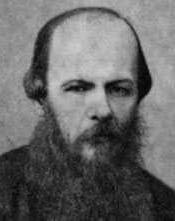
Dostoyevsky's card scam turns against himself!
The Baden-Baden casino in Germany is perhaps the most beautiful gambling palace in the entire world. When I was there with my pastposting team in 1994, I was so awed by the place that I couldn’t bring myself to do a move on its tables. The casino was more than just a casino; it was an art museum. Inside, below lustrous chandeliers hanging from towering ceilings were separate regal gaming rooms whose walls were lined with works of art by the masters. One of these rooms was reserved for a high-stakes poker game attended by European nobility from all over the continent.
The Baden-Baden poker game basked in the glory of its heyday in the 1870s when the famed Russian writer Dostoyevsky whiled away more time in the casino’s crowded roulette room than he did penning manuscripts. When his numbers went cold, Dostoyevsky was known to stroll up to the poker game and take a seat.
The casino supplied majestic European-style playing cards that were produced by a printer who was actually a descendant of Gutenberg and whose printing shop was located just five miles by carriage from the regal casino.
Well, as the story goes, one of the princes playing in this game was a degenerate gambler who lost so much money that he endangered both his castle and his princess. He was running up astonishing debts to the rest of the nobility in the game, which threatened to create a big enough scandal to aggravate even King Ludwig, who was already considered apathetically insane by most Bavarians. The prince didn’t know what to do, but one night while alone in his castle (his princess, furious with him for his gambling losses, had run off with a caretaker) he had a brainstorm.
One brisk, sunny fall afternoon, after another losing session at the poker game, the prince instructed his carriage chauffeur to take him to see the printer. After formalities were exchanged, he advised the printer that he had written a special poem of apology for the princess and wanted the printer to reproduce it with his most elegant calligraphy. But it was all a load of crap. What the prince wanted was a tour of the printer’s facilities, which he got from a very obliging printer who knew he would charge the prince a pretty shilling or two for his work.
Later that night, the prince drove his own carriage to the print shop, sneaked inside it and secretly altered the engraving plates the printer used to produce the playing cards for the Baden-Baden casino. The plan was that the printer would unknowingly supply Baden-Baden with marked cards.
At the time, cards were not nearly as mass produced as they are today, so the prince would have to wait a few weeks before the marked decks hit the poker table. He resisted all temptation and managed to stay away from the casino until he knew the marked cards were in play. In the interim he even had the good fortune to win back the princess, who found out that the caretaker had been two-timing her.
Naturally the prince went on a fabulous winning streak at the Baden-Baden high-stakes poker table. He busted out a collection of counts, viceroys, dukes, earls and even the great Dostoyevsky. In fact, he put such a hurt on Dostoyevsky that the famed Russian writer was forced to go home to Russia and write The Gambler, for which he received enough money to return to Baden-Baden and seek his revenge against the prince.
When Dostoyevsky returned to the casino, the marked cards were still in play. It didn’t take long for the prince to send him packing again. After writing yet another book to finance still another gambling binge, Dostoyevsky returned to the poker table yet again. This time after losing, the great Russian writer jumped up and accused the prince of cheating. When the prince, filled with indignation, demanded of Dostoyevsky to produce evidence backing up his accusation, the writer laid the printer’s business card on the table.
Stunned, the prince asked, “How did you know?”
Dostoyevsky replied, “I did the same thing but the idiot sent my cards to the wrong casino.”
Subscribe to:
Posts (Atom)

 Posts
Posts


