Wednesday, July 02, 2008

Is 2008 World Series of Poker Gonna Be Cheat-Free?/Another Guilty Plea in International Baccarat Scam


I have not heard of any cheating allegations so far at this year`s WSOP, but don`t hold your breath too long thinking that the 2008 super poker tournament will finish up without any cheating scandals. If you do hold your breath, don`t forget that you will have to wait until mid-November to bear witness to a cheating-free WSOP--if it does indeed happen. For those of you who don`t realize it, there will be nearly a four-month interim between the determination of the final table of the 2008 WSOP championship event and the play of that final table, during which lots of time for conspiring, scheming and pre-cheating will be available for those directly and indirectly involved in the giant pot of prize money.

The WSOP in recent years has had its share of scandals. In 2005, counterfeit tournament chips were found in two different events. In 2006, the eventual champion Jamie Gold was accused of renegging on a prize-money percentage deal he`d made with a backer before the championship event began, and last year well-known and respected tournament player Bill Chen was accused of suspicious deal-making that supposedly led to chip-dumping and softplay incidents.

I will be very surprised if the 2008 WSOP championship event escapes scandals and scandalous activity, but we will have to wait and see. But with four months of "WSOP idleness," I can only imagine what schemes and scams are going to be concocted with all those millions at stake!

IN OTHER NEWS, another participant in the biggest casino scam in history pleaded guilty in court. You all remember the humongous international baccarat scam that hit dozens of casinos in the US and Canada last year and corrupted at least that many casino employees, most notably dealers and pit personnel. Well, now the major players in that scam are falling like dominoes with their guilty pleas in front of federal judges. The latest, Son Hong Johnson, 45, pleaded guilty today in San Diego to conspiring to participate in a racketeering enterprise, the "Tran Organization," in a scheme to cheat casinos across the country out of millions of dollars, Acting Assistant Attorney General for the Criminal Division Matthew Friedrich, U.S. Attorney for the Southern District of California Karen P. Hewitt and U.S. Attorney for the Western District of Washington Jeffrey C. Sullivan announced today. Johnson also pleaded guilty to conspiring to commit theft from the Emerald Queen Casino, an Indian tribal gaming establishment near Tacoma, Wash.

A three-count indictment was returned in San Diego on May 22, 2007, and unsealed on May 24, 2007, charging Johnson and 13 others each with one count of conspiracy to participate in the affairs of a racketeering enterprise; one count of conspiracy to commit several offenses against the U.S., including conspiracy to steal money and other property from Indian tribal casinos; and one count of conspiracy to commit money laundering. As part of his plea agreement, Johnson agreed to have a separate indictment against him transferred to San Diego for plea purposes. The separate indictment, returned on May 24, 2007, in the Western District of Washington, charged Johnson and seven others for alleged violations related to card-cheating activity at the Emerald Queen Casino.

The San Diego indictment also charged five separate individuals each with one count of conspiracy to commit several offenses against the U.S., including conspiracy to steal money and other property from Indian tribal casinos; and one count of conspiracy to commit money laundering.

In his plea agreement, Johnson admitted that on numerous occasions between approximately March 2003 and July 2006, he participated in gambling cheats together with other alleged members of the Tran Organization at casinos, such as: Emerald Queen Casino in Tacoma; Foxwoods Resort Casino in Ledyard, Conn.; Mohegan Sun Resort Casino in Uncasville, Conn.; Resorts East Chicago Hotel and Casino, East Chicago, Ind.; and Horseshoe Casino and Hotel, in Tunica, Miss.

Also in the plea agreement, Johnson admitted that he and his co-conspirators unlawfully obtained up to $7 million during card cheats. For forfeiture purposes, he agreed to a personal money judgment in the amount of $155,000, which will be entered by way of a preliminary order of forfeiture. He also acknowledged that the restitution that he may be ordered to pay by the court at sentencing is not limited by the forfeiture amount.

According to the indictment, the defendants and others executed a "false shuffle" cheating scheme at some of the listed casinos during blackjack and mini-baccarat games. The indictment alleges that members of the criminal organization bribed casino card dealers and supervisors to perform false shuffles during card games, thereby creating "slugs" of un-shuffled cards. According to the indictment, after tracking the order of cards dealt in a card game, a member of the organization would signal to the card dealer to perform a "false shuffle," and then members of the group would bet on the known order of cards when the slug appeared on the table. By doing so, members of the conspiracy repeatedly won thousands of dollars during card games – up to $868,000 on one occasion.

The indictment also alleges that the members of the organization used sophisticated mechanisms for tracking the order of cards during games, including hidden transmitter devices and specially created software that would predict the order in which cards would reappear during mini-baccarat and blackjack games.

An indictment is merely an allegation and is not evidence of guilt. A defendant is entitled to a fair trial in which it will be the government’s burden to prove guilt beyond a reasonable doubt.

Johnson’s sentencing is scheduled for Dec. 8, 2008, in San Diego, before District Judge John A. Houston, in U.S. District Court for the Southern District of California. At sentencing, Johnson faces a maximum sentence of 20 years in prison on the racketeering conspiracy charge and a maximum of five years in prison on the conspiracy charge relating to theft from an Indian tribal gaming establishment.

Johnson is the eleventh defendant to plead guilty in the San Diego indictment. Phuong Quoc Truong, Anh Phuong Tran, Martin Lee Aronson, Liem Thanh Lam, George Michael Lee, Barry Wellford, Willy Tran, Tuan Mong Le, Duc Cong Nguyen and Han Truong Nguyen have all pleaded guilty to charges against them related to this scheme. Han Truong Nguyen was sentenced on May 12, 2008, to 27 months in prison and ordered to pay $1,896,659 in restitution, payable to designated victims in the case. Nguyen was also ordered to serve three years of supervised release. The remaining defendants who pleaded guilty are awaiting sentencing.

The case is being investigated by the FBI’s San Diego Field Office; the Internal Revenue Service-Criminal Investigation; the San Diego Sheriff’s Department; and the California Department of Justice’s Bureau of Gambling Control. The investigation has received assistance from federal, state, tribal and foreign authorities, including: the Ontario Provincial Police; the National Indian Gaming Commission; the U.S. Attorney’s Office for the Western District of Washington; FBI Resident Agencies in Gulfport, Miss., Tacoma, and Toledo, Ohio; the Indiana State Police; the Rumsey Rancheria Tribal Gaming Agency; the Sycuan Gaming Commission; the Barona Gaming Commission; the Mississippi Gaming Commission; the Washington State Gambling Commission; and others. The prosecution of the case is led by the Criminal Division’s Organized Crime and Racketeering Section (OCRS). Department of Justice Trial Attorneys Joseph K. Wheatley, Robert S. Tully and Gavin A. Corn are prosecuting the indictment in San Diego. Assistant U.S. Attorney J. Tate London of the U.S. Attorney’s Office for the Western District of Washington, is prosecuting the case in Seattle related to alleged cheating at the Emerald Queen Casino.

Sunday, June 29, 2008

Annie Duke Speaks Out Again on Absolute Poker and Ultimate Bet Cheating Scandals


The cheating scandals surrounding online poker sites UltimateBet.com and its sister Absolute Poker.com continue to make waves in both the mainstream and industry media and in the player community, and the latest element in what seems to be a concerted damage control initiative by the owners is a Poker News video-streamed interview with the much respected poker pro Annie Duke.

This can be accessed at the Poker News Website,

Duke has a long association with UltimateBet and has been involved in both operational and branding endorsement for the website. Apparently last fall she was disenchanted with the way things were going and was thinking about distancing herself from the enterprise. In January this year, the 'hole card' scandal broke and apparently the change of management that occurred convinced Duke to revise her position in a move that was "a big 180 for me."

The cause of this epiphany was apparently the transparency of the new management, headed by CEO Paul Leggett; the way in which it handled the crisis (paying out an unspecified but claimed "seven figures" to affected players); getting rid of the "bad apples" responsible for the scandal and a bigger say for Duke in the conduct of the business.

Judging by her comments in the interview Duke is now firmly on board and confident that the historical problems have been fully addressed, although management is still considering the pursuit of those responsible. This is apparently problematical due to legal considerations around identifying the culprits and under which jurisdiction to pursue them.

Duke follows the company line in claiming that company revenues were not affected by the crisis, which is surprising when one considers the magnitude of the cheating and the editorial coverage it received. The company strategy of recruiting big poker names to endorse the website is also apparent in her comments.

Listening to the interview, there are confusing references to both 'change of management' and 'change of ownership'. This gives little clarity on who owned Absolute/Ultimate Bet prior to its acquisition by Tokwiro Enterprises, a Kahnawake registered company owned by former Mohawk grand chief Joe Norton, or what Tokwiro paid for the companies and when.

The UltimateBet story is not about to fade away. In her interview Duke confirmed information circulating for some months in the industry that the mainstream television investigative program "60 Minutes" is about to air the scandals. Producers for the program contacted Duke whilst she was at the ongoing World Series of Poker, although she does not amplify what was discussed.

Subjectively speaking, we had the impression that this was a continuation of the damage control initiative which the "new management" has been so vigorously pursuing, suggesting that the impact of the cheating scandal may have been bigger than UB would like to acknowledge. The role of the major poker forums in driving the resolution of these scandals also appeared to be underplayed, whilst the proposition that bashing UB was not good for the industry is arguable.

That said, the potential for harm to the industry's credibility that an adverse "60 Minutes" take on the affair is likely to have is a legitimate concern. What a pity that the systems at UB/AP failed in the first place, bringing about this crisis.

July Scam of the Month Posted!

My July scam of the month is "The Cooler." I am not talking about the 2003 casino movie of the same name starring Alec Baldwin and William H. Macy, but rather of a very effective casino cheating scam used by dealers to rip off the casinos they work in. Click here to read about it.

Thursday, June 26, 2008

New Roulette Tables To Fight Cheats


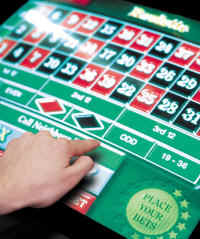
Roulette tables may get touch screens to combat cheating!

If Microsoft's "Surface" becomes a casino fixture next to the slot machines, the touch-screen table computer will find plenty of company. Not only are digital poker tables being developed--complete with "peel up" card corners so players can read their hands discreetly--but even touch-sensitive roulette games are on the way.

There have been attempts in the past to develop "pastpost free" roulette tables, but those failed mainly because the added protection brought along with it too many inconveniences, such as alarms going off when players innocently reached over the layout to lend a cigarette lighter or shake a hand while the table´s anti-pastposting device was activated to catch roulette players´ hands on the layout when they weren´t supposed to be there, mainly after the dealer had already marked the winning number with the dolly, at which time any hands entering the layout were detected as possible cheat tools. Similar to radio frequency identification (RFID) technology, this latest "safe casino play" invention should be more successful than its forebearers, but as RFID technology has been very slow to catch on worldwide in casinos, we will have to wait and see just how much a pain in the...hand...these touch screen roulette tables will be.

The "MultiPlay Roulette" system is the latest from Sweden's TouchTable, featuring a 56-inch touch LCD with 3,840 × 2,160 resolution. The table can accommodate up to seven players and, thanks to the company's proprietary technology, it can identify each person's bet.

Like other digital casino products, the idea is to speed the pace of play and reduce the chances of discrepancies or cheating. Because, as some of us have learned painfully over the years, fast play always favors the house.

To read a magazine article I wrote on RFID technology in casinos, click here.

Tuesday, June 24, 2008

Bodog Signs Another Poker Cheat!


Bodog Signs Reformed Justin Bonomo!

It seems to be par for the course: Get caught in an online poker scam, then say you´re sorry, apologize to everyone and his mother reading the poker blogs, then sign a deal for big bucks with a major online poker room. Such is the case again, this time with Justin Bonomo, better known as "ZeeJustin" who was caught cheating by playing on multiple accounts on sites like PartyPoker and PokerStars. (To read more on previous online cheats who signed big poker deals, click here.

Oh how I wish I had been caught cheating at online poker! Then I could have signed a big contract with Bodog too! Only problem, I was never an online poker cheat. In my next life, I will have to consider changing professions!

As reported by Jennifer Newell:

On May 5th, 2008, Bodog Poker announced that it had signed Justin Bonomo to its roster of pros, which already includes David Williams, Jean-Robert Bellande, and Evelyn Ng. Justin will represent Bodog both in live tournaments and online at Bodog, as well as possibly participating in other marketing and branding opportunities.

Poker pros ink deals regularly with online poker sites. Why is this one significant and worthy of a column? Because Justin is the Justin Bonomo, better known as “ZeeJustin” in online poker circles—the player who was caught cheating by playing on multiple accounts on sites like PartyPoker and PokerStars. And though he didn't handle the scandal well when it happened—he was not even 21 years old—he has since matured, taken particular care to address the problem, and changed.

When the scandal first broke in early 2006, Justin was not afraid to post on web forums with his excuses and justifications for using multiple accounts. He claimed that he did so because his style under “ZeeJustin” was too wellknown, and he needed to be anonymous in order to win more money. Granted, that is a simplification of his reasons for the sake of space in this column.

Eventually, the wrath he felt from the poker community caused Justin to realize the impact of what he had done, and his justifications turned to apologies. In his immaturity, he even attempted to strike a deal with PokerStars that would allow him to play on the site for several months, with all proceeds going to charity. “For me, the benefits are obvious,” he wrote to PokerStars. “I would get to play on your site again and return some credibility to my name, but more importantly, I see this as a way to become the person I've always told myself I would be. This won't be a one-time thing. This is how I want to live the rest of my life… Basically, I realize that what I've done is terrible, but I

refuse to accept the fact that those actions define me as a person. I see this as a way to overcome what I've done, not as a poker player, or a wanna-be celebrity, but as a human being.”

The site ultimately denied his request. Justin then took his poker skills to the live tables once he became of legal age to play in the United States. He played tournaments humbly and quietly, not drawing any attention to himself. He allowed time to heal wounds, and in the year and a half that he has been on the circuit, he has eventually gained the respect of many poker players who have seen his remorse and witnessed his true love of the game.

What makes Justin different from recent players involved in cheating scandals, like Sorel Mizzi and JJ Prodigy, is that he grew to understand the severity of his previous actions and let some time pass as he carefully repaired his image. Though he's still in his very early twenties, he seems to have matured immensely. Players like Mizzi seem to expect immediate acceptance of whatever apology is issued, and they come to tournaments as cocky and full of themselves as ever. As basic as it may seem, people need time to accept apologies and see another side of those players, and Mizzi is one of several who do not seem to understand this.

Justin Bonomo has become a successful live tournament player, with final tables at EPT and WSOP events to his credit, as well as several near-televised WPT tables. He has made over $1.1 million in his short time on the circuit, and the Bodog sponsorship appears to be a positive step in his journey.

Historic Rigged Roulette Cheating Wheel Found In Reno!


X-Ray Reveals What’s Inside Rigged Roulette Wheel!

We're a state built on gaming, but the thing about gambling is it also attracts cheaters. Monday, the University of Nevada Medical School helped out with a cheating scam no agent with the Gaming Control Board has seen before.

"We've heard stories over the years, we've read about it but we've never seen one - it's in the league with DB Cooper, Bigfoot and UFO's," said Jim Edwards a senior agent with the Gaming Control Board.

The wooden wheel spent 70 years in a Sacramento-area garage.

A Reno couple bought it and learned it had a series of wires hidden inside. The wires were hooked up to four batteries wrapped in newspapers from the "Sacramento Bee" dating to December 31, 1932.

"And I said, 'Oh my God! We have a gaffed table,'" said owner Sharon Nickson Cox, "And to the best of our knowledge it's the only one in the world today that hasn't been destroyed by the mob or the feds."

But learning how it works could only be accomplished with the help of X-ray. "We originally thought maybe it was operated with magnets with the batteries, but we believe now it was a mechanical device - maybe a little pin came out of the side that would make the ball drop," said Cox.

And although any crime would have happened some 80 years ago (likely in California), the Nevada Gaming Control Board is still curious, "We like to have accurate information in our files as to what happens, what has happened historically," said Edwards.

Because as they say, history repeats itself.

The roulette wheel originally sold for $250 in the 1920's. Today, it's appraised for $250,000.

Sunday, June 22, 2008

Blackjack Cheat Snagged Cheating Church Blackjack Game!


Blackjack cheating your local church! I have heard of lows but that is about the lowest of all of them. Even I have never cheated at a church blackjack game! Cheating at a party blackjack nite, that´s one thing...but a church...that´s a sin! Well, I´m glad the guy got caught. It turns out he was a card-mucker, palming cards (aces and tens) out of play and putting them back in when he needed them. Here´s what happened:

WHEN THE KING of diamonds and the ace of spades kept coming up winners in Roland "Rico" Chapa's blackjack hands last year, a dealer at the church festival called in the pit boss.

Other players at the table accused Chapa, a 67-year-old used-car dealer, of palming the cards from the deck.

Now, Chapa's 30-year lucky streak as a self-described bookmaker and "gangster" might be over after a Franklin County jury convicted him of cheating, a felony in Ohio for those like Chapa with a previous gambling conviction or someone who tries to corrupt the outcome of a bet of more than $500.

Money changed hands so fast at the St. Timothy Church fundraiser on July 14 that no one remembers how many hands Chapa played before pit boss Rob Gardner called him a cheat, said Assistant County Prosecutor Amanda Lowe.

Then festival organizers called authorities.

Lowe called five witnesses on Friday to prove the rarely-used criminal code before Common Pleas Judge Richard S. Sheward. One said a two of spades dropped from Chapa's slacks when he stood up to empty his pockets.

Chapa testified that he is a diabetic who drank too much that night and was left behind by two buddies. He said he walked into the festival with $650 and left with $450.

"I actually lost money that night. I told them (deputies) if the Catholics wanted more money, I'd have given them the $400 I had and kept $50 for a cab," he said in an interview before the verdict.

Chapa said sheriff's detectives have been after him for 10 years.

"They wanted me to rat out other bookmakers, and I don't know any."

Instead of arresting him, deputies called a cab and sent Chapa packing.

Chapa, who wore a white suit, black shirt and gold alligator belt buckle, seemed relaxed about his chances. When asked how long he has gambled, he replied, "Can I take the Fifth on that?"

It took a jury less than 30 minutes to convict him yesterday of cheating and possession of criminal tools. Sheward set sentencing for Aug. 6; Chapa faces up to two years in prison for the hustle. His daughter Katrina said authorities have harassed Chapa for more than 30 years.

"We will immediately appeal this," she said.

Defense attorney Lewis T. Dye told jurors that his client was too drunk to cheat.

"They waited six months after his last arrest to bring this case," said Dye, whose father has represented Chapa in earlier gambling cases.

Chapa's apartment at 6998 Sawmill Village Dr. on the Northwest Side was raided in 2007 as a sports bookmaking operation, the sheriff's office says. He agreed to plead to one count of gambling.

According to a search warrant, an investigation found that Chapa met customers at area sports bars and offered to take their bets for a 10 percent service charge.

Bets also were placed at the car lot where Chapa works.

An affidavit used to obtain the warrant said Chapa told a detective that he had been a bookmaker and "gangster" for more than 30 years.

Computerworld Magazine Uses Online Poker To Demonstrate Rampant Insider Cheating In The Business World

Computerworld article:

When determining the risk to a system and the data stored on it, insider threats are generally regarded as lower risk. Despite the complete access (high risk) that insiders generally have, most of the time insiders are trusted agents (very low risk) on the network. When it breaks down, it can break down in a catastrophic manner, especially if there is money at stake.

One such incident took place in the middle of last year when one or more individuals with trusted access to the systems of UltimateBet and Absolute Poker used that access to create several fake usernames and used them to make an undisclosed amount of money off online poker players. While creating the fake player accounts may not necessarily be cheating, it was the use of software that allowed the insiders to view the competing players' hole cards which was.

Absolute Poker was fined $500,000 in January for four breaches of the gaming commission's rules, three of which were for inaction or attempt to cover up the incident by the site. In addition to the fine, Absolute Poker will be subject to random auditing over the next 24 months, at their expense.

Related Content

Scientists build robot that can replicate itselfWill gadgets make knowledge obsolete?Five things you should never tell your bossIT pro's vacation planner: Must you unplug to unwind?Thieves steal tapes holding 2.2M billing recordsSearch for articles like this oneOn the positive side for the affected human players, it was found that Absolute Poker had acted to refund losses and taken steps to prevent similar action in the future.

Online poker playing has always been surrounded by the whispers of cheating when it comes to the actions of other players at the table and ongoing investigations with Absolute Poker turned up a more serious cheating scheme that had been operational for 21 months, completely encompassing the above incident, but unrelated.

When big money is on the virtual table for playing a card game across the Internet, people are going to be motivated to do what they can to weight the odds in their favor. At the $1.2 million 2007 World Championship of Online Poker, managed by PokerStars, the first place finisher was disqualified for cheating (believed to have been multiple accounts active at the same time to improve chances of winning, though at $2,500 per buy-in the cheating is believed to be somewhat more substantial).
Questions should now be asked about the sale of UltimateBet and Absolute Poker, given that the cheating was shown to have been ongoing from before the sale (October 2006) and that the individuals involved were shown to be linked to the company prior to the sale. With potentially multi-million dollar losses, fines, and refunds liable to be paid out there may be a case to be made against the previous owners.

New Florida Casino Cheats Candy Store Ready For Cheat Action!


Today the Seminole Hard Rock Hotel-Casino near Hollywood, Florida, expanded its casino to include a host of table games including blackjack, roulette, craps and poker carnival games such as Caribbean Stud, Pai Gow Poker and others. Before today´s dramatic changeover, the Seminole Hard Rock Casino was strictly a poker room facility. What does this mean as far as cheating is concerned?

Well, I´ll tell you this: If I were still a cheating man, I would be on the next plane to Fort Lauderdale, then driving my rental car to the Hard Rock Casino. Then I would run to the first new table game I saw, pop in a cheat move, then another and another...until I was too tired to stand in the casino!

As many of you might know from reading my book "American Roulette," new casinos (which the Hard Rock qualifies as since it is new to casino table games) are extremely vulnerable to professional cheating teams, and the Hard Rock is going to get hit...and hit hard! I have often stated that the only way I would ever come out of retirement to cheat casinos is if legalized gambling came to Miami Beach. Well, the Seminole Hardrock Cafe Casino is in South Florida, but it´s still just a few miles away from a Richard Marcus encore!

I have read articles in Florida´s newspapers this week about how the Hard Rock has been training its dealers at dealers schools to combat the cheaters. Well, I wish them a lot of luck!...And this whole event reminds me of Foxwoods in Connecticut when it opened back in ´92 and of the entire Mississippi Gulf Coast when casinos opened there that same year...Oh what bloodbaths they were for my cheating team! By blood, I mean rushing swells of $500 and $1,000 chips pouring into our pockets!!

I will keep you current on all the cheating action I hear about in Hollywood.

Swiss National Newspaper Article on Richrad Marcus


For those of you who don`t read German, this is a news article about me that appeared in Switzerland´s national newspaper, the Neue Zürcher Zeitung. I was quite surprised to see that the Swiss are so interested in the life of a casino cheater, but I guess with the tremendous box office success of the blackjack movie "21," the whole world is enraptured by stories of how people beat casinos. If you want to read a very similar article in English, read this FHM article about my casino cheating career.

Die Abkürzung zur ersten MillionPräzises Timing, Psychologie und ein bisschen Mumm. Ein Amerikaner, der mit Betrug am Roulettetisch 20 Millionen Dollar verdient haben will, verrät seinen besten Trick. Von Andreas HirsteinToolboxDruckansicht

Fenster schliessen
«Pat war ein liebenswürdiger Kerl − ausser, dass Pat ein Dieb war, ein Dieb wie ich», sagt Richard Marcus. Über zehn Jahre lang betrogen die beiden Amerikaner mit weiteren Komplizen die grossen Kasinos dieser Welt: Las Vegas, Atlantic City, Monte Carlo, Baden-Baden. «Insgesamt haben wir 20 Millionen Dollar kassiert, bis ich mich an Silvester 1999 zur Ruhe gesetzt habe», behauptet Marcus, der heute wieder in seiner Heimat New Jersey und in Saint-Gervais am Fusse des Montblanc lebt.
Marcus war der Kopf der Bande: «Ich war der , wie wir es nannten. Rien ne va plus! − für Richard Marcus begann das Spiel so richtig erst mit diesem Satz. Marcus hatte die geschicktesten Hände. Von ihm stammten auch die Ideen für immer neue Betrugsvarianten. «Als in den achtziger Jahren über jedem Spieltisch Überwachungskameras angebracht wurden, war ich besessen von der Idee, die Technik zu überlisten. Und das habe ich auch geschafft: Mein -Spielzug ist der beste Kasino-Trick aller Zeiten. Da können Sie jeden Experten in der Branche fragen.»
Anzeige Das richtige TimingEin guter Betrüger, das ist nach Marcus' Definition immer auch ein netter Mensch. «Man braucht das richtige Timing, und man braucht Mumm. Aber vor allem muss man sympathisch wirken − so wie Pat», sagt Marcus. «Ich mochte ihn, alle mochten ihn, vor allem die Frauen. Und als er schliesslich auch am Spieltisch gut wurde, haben wir die Kasinos nur so ausgenommen.»
Insgesamt habe er fast 25 Jahre lang vom Betrug an den Roulette-, Black-Jack- und Baccara-Tischen dieser Welt gelebt. «Aber ich habe eigentlich mein ganzes Leben lang gezockt. Sein erstes grosses Geld verdiente er mit Pferdewetten. 20 000 Dollar. Das war sein Ticket nach Las Vegas. Im Hotel-Casino Riviera nahm er ein Zimmer, und er gewann. Nach einer Woche hatte er 100 000 Dollar. Doch der neue Reichtum zerrann schneller, als Marcus ihn angesammelt hatte. In einer einzigen Nacht verlor er alles. Als er die Hotelrechnung nicht mehr bezahlte, landete er auf der Strasse. Ohne Geld, ohne Job und ohne Ausbildung. Von seinen New Yorker Freunden wollte ihm niemand Geld leihen, und seine Eltern wollten nichts mehr von ihm wissen.
Nach ein paar Wochen ergatterte er einen Job im Four-Queens-Kasino. Nach zehn Monaten setzte sich ein Mann an Marcus' Baccara-Tisch. Er nannte sich Joe Classon, kam ebenfalls von der Ostküste und fragte Marcus, warum er das Kasino nicht bestehle − so wie alle anderen Angestellten. «Ich wolle meinen Job nicht wegen ein paar 5-Dollar-Chips gefährden, antwortete ich.»
Trotzdem trafen sich die beiden Männer nach Feierabend, und Marcus liess sich zu seinem ersten Betrug überreden. Jeweils am Ende seines Dienstes präparierte er den Kartenstapel, so dass Classon in der folgenden Schicht abkassieren konnte. Das funktionierte so gut, dass sich Marcus für eine Karriere als professioneller Betrüger entschied. Er kündigte seinen Job und wurde festes Mitglied in Joe Classons Betrügerbande.
«Joe hat mir alle seine Tricks beim gezeigt. Dabei verändert man seinen Wetteinsatz, wenn das Spiel schon entschieden ist. Er hat mir auch beigebracht, wie wichtig die Psychologie ist. Jedes Gehirn ist manipulierbar. Glauben Sie mir, sogar Einstein würde auf unsere Tricks reinfallen», sagt Marcus.
In einem seiner erfolgreichsten Spielzüge arbeitete Marcus in einem vierköpfigen Team: Er selbst, der als Mechaniker die eingesetzten Chips vertauscht; eine schöne Frau, die den Gewinn für sich reklamiert, und zwei Hilfs-Wetter, deren Aufgabe es ist, den Croupier für den Bruchteil einer Sekunde abzulenken.
Alle vier Teammitglieder beziehen zunächst ihre Position am Tisch. Die Frau besitzt zunächst fünf 100-Dollar-Chips. Einen tauscht sie gegen 100 1-Dollar-Chips ein und baut damit fünf Stapel vor sich auf. In den hintersten Stapel mischt sie zwei 100-Dollar-Chips und übergibt unbemerkt zwei weitere an den Mechaniker, der nun ebenfalls einen gemischten Stapel zusammenstellt.
Der Croupier kann die gemischten Stapel jedoch nicht sehen, weil sie hinter den niederwertigen Stapeln verborgen sind. Jetzt setzt die Spielerin jeweils fünf 1-Dollar-Chips auf neun unterschiedliche Zahlen. Falls eine dieser Zahlen gewinnt, tauscht der Mechaniker den entsprechenden Stapel durch den mit 100-Dollar-Chips «angereicherten» gemischten Stapel aus. Dies gelingt unbemerkt, weil der Croupier für den Bruchteil einer Sekunde wegsehen muss, wenn er die strategisch placierten Einsätze der Hilfs-Wetter abräumt.
Psycho-Verwirrspiel«Bis hierhin ist alles reine Mechanik», sagt Marcus. «Das genügt aber nicht. Der Croupier würde misstrauisch, wenn plötzlich 100-Dollar-Chips im Gewinnstapel auftauchen. Er würde sich weigern, den Gewinn auszuzahlen, ohne die Videoaufnahmen zu überprüfen.»
Deswegen folgt jetzt ein psychologisches Verwirrspiel, an dessen Ende sogar langjährige Kasinoangestellte wieder ans grosse Glück im Spiel glauben. Die Spielerin schiebt ihren gemischten Stapel in den Vordergrund. Dann beginnt sie laut auszurufen: «Oh, mein Gott! Wo sind meine beiden 100-Dollar-Chips? Ich habe sie verloren. Mein Mann bringt mich um!»
Auf dem Fussboden, in ihrer Handtasche, überall sucht sie hysterisch nach den Chips. Dann aber, im selben Moment, in dem der Croupier die beiden 100-Dollar-Chips im Gewinnstapel entdeckt, bricht die Spielerin in lauten Jubel aus: «Da sind sie. Ich kann es nicht fassen. Ich habe sie aus Versehen gesetzt, und sie haben gewonnen. Ich habe gerade 7000 Dollar gewonnen, 7000!»
«Sie müssen sich vorstellen», sagt Marcus: «Da steht eine hübsche Frau, die es niemals nötig hätte zu betrügen, die erst vor Panik zittert und dann in Freudentränen ausbricht − da ist sogar der Croupier glücklich, dass er auszahlen darf. Und schliesslich bekommt er auch noch einen 100-Dollar-Chip als Trinkgeld.»
Marcus ist in seiner fast 25-jährigen Karriere nie erwischt worden. Sechsmal wurde er in einem Hinterzimmer befragt. «Aber nachweisen konnte man mir nichts», sagt er. Beendet hat er seine Betrüger-Karriere, weil er genug verdient hatte. Von den 20 Millionen, blieben ihm 7.
Nichts, was Sie bereuen, Herr Marcus? «Nein. Ich liebte den Adrenalin-Kick. Wenn ich etwas bedaure, dann dass ich keine Familie habe. Meine Ehe ist gescheitert, aber das lag nicht an mir, sondern an der Drogensucht meiner Frau.» Zu seinen Eltern hat Marcus keinen Kontakt mehr, und auch zu seiner Schwester habe er kein gutes Verhältnis. «Aber ich bin nicht alleine. Ich habe Freunde.» Heute schreibt Marcus Bücher und betreibt eine Website. Seine Autobiografie «American Roulette» soll verfilmt werden. «Ich berate heute dieselben Kasinos, die ich früher betrogen habe. Die zahlen mir 5000 Dollar pro Tag.» Und die versteuert Marcus heute. Ganz ehrlich.


«Ich berate heute
dieselben Kasinos, die
ich früher betrogen
habe. Sie zahlen mir
5000 Dollar pro Tag.»